





New Zealand Immigration Reform
FIXNZ examines New Zealand immigration reform through evidence on workforce needs, employer responsibility, migrant protections, citizenship and long-term national planning.


Evidence Cards
Ireland — Public capacity falling behind
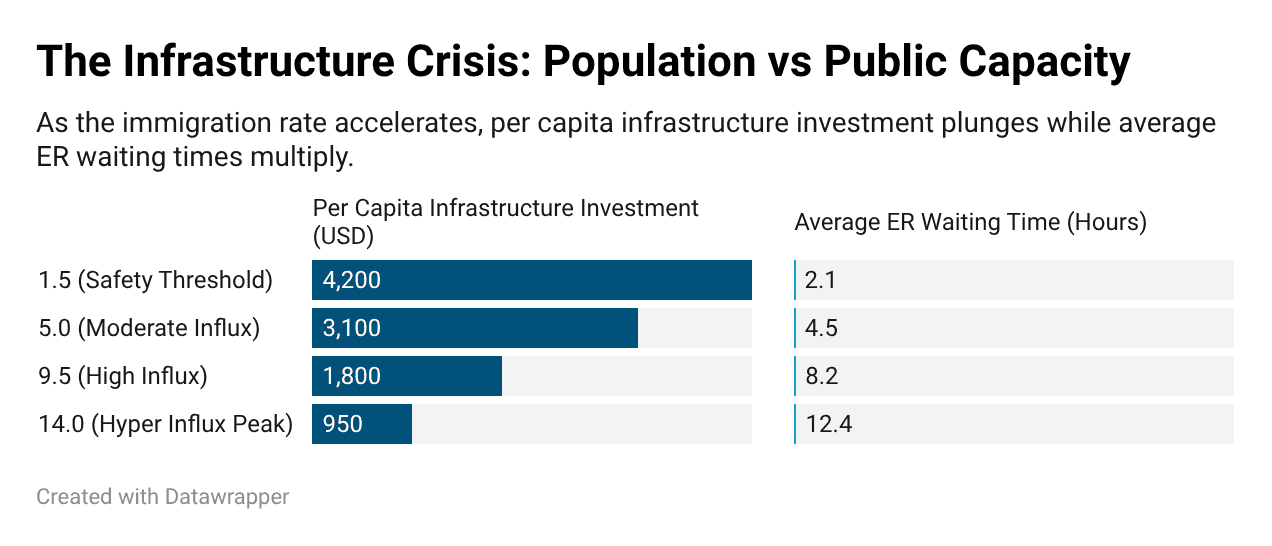
Infrastructure capacity falling behind
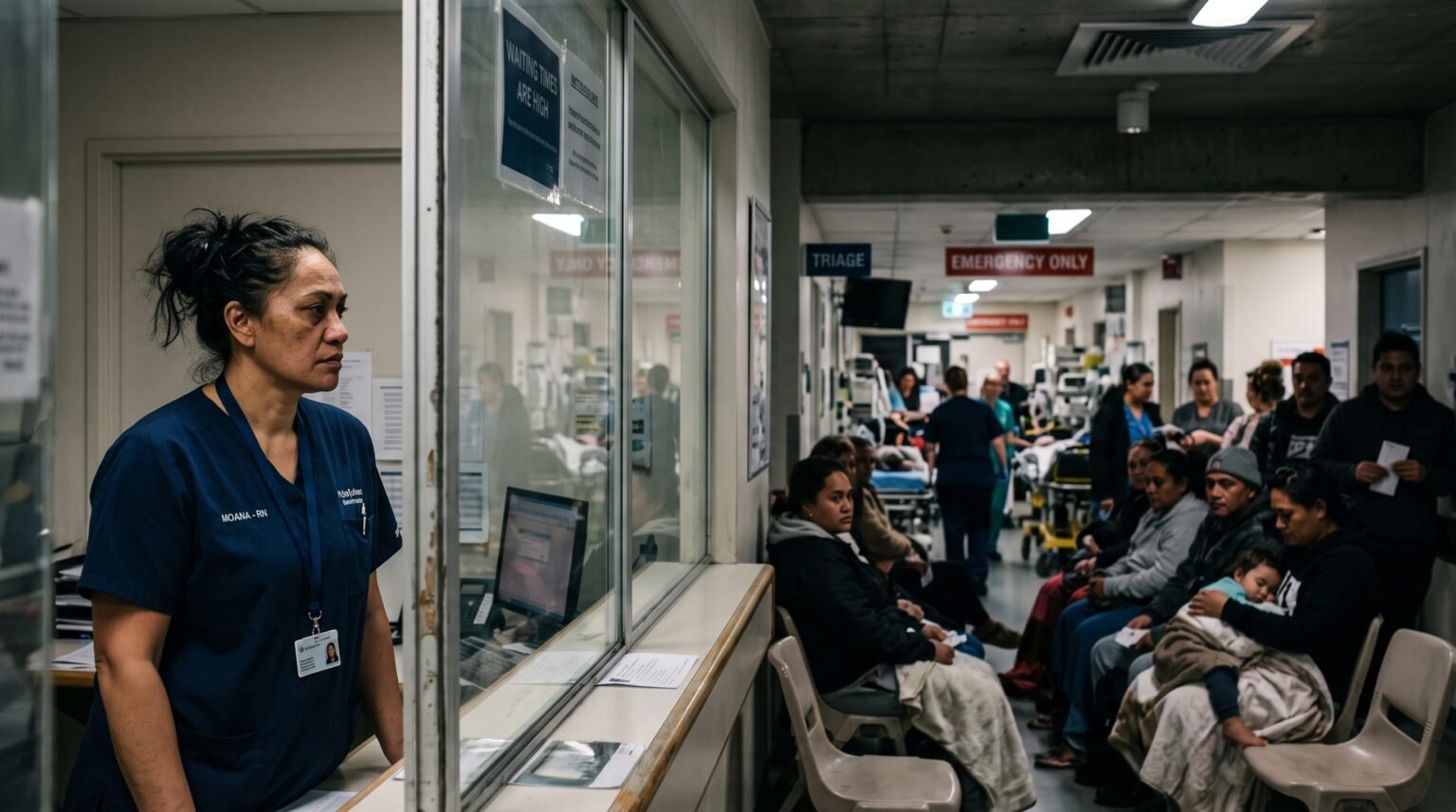
Ireland’s rapid population growth increased pressure on healthcare and infrastructure. Dublin GP waits reportedly rose to 9–14 days, while average emergency waiting without a bed reached about 12.4 hours. Some research also found migration growth running around 3.4 times faster than public capital growth per person.
Lesson for NZ
Migration should not grow faster than housing, healthcare and infrastructure capacity.
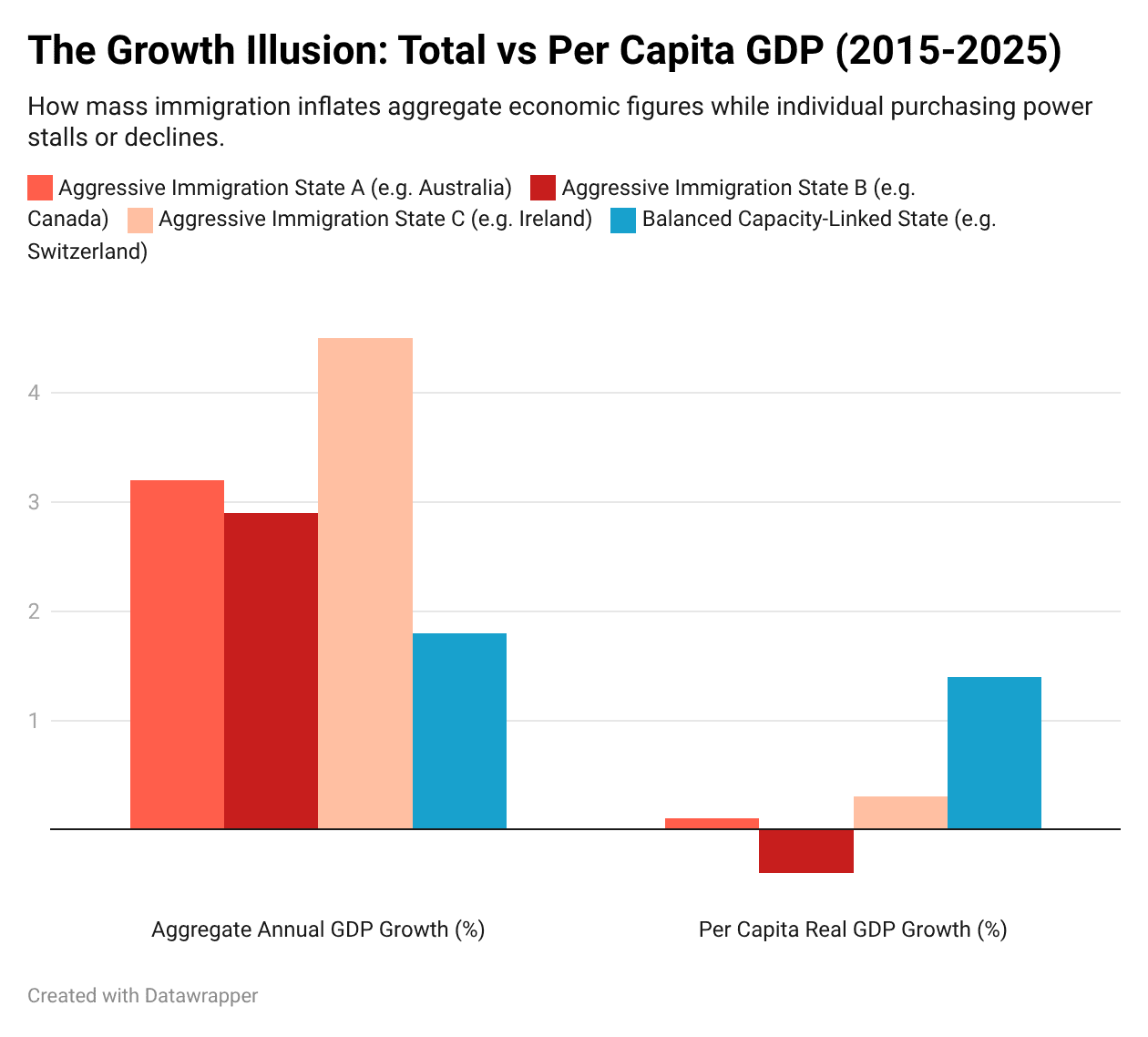
Australia — Growth without per-capita progress
Headline growth can hide weaker outcomes
High migration supported total GDP, but Australia’s real GDP per person reportedly fell for six consecutive quarters around 2023–24.
Lesson for NZ
Judge migration by GDP per person, productivity and real wages—not total GDP alone.
Canada and UK — Pressure shifts to local services
Population growth creates local costs
In parts of Canada, 18%–22% of some school budgets was reportedly redirected to language and support services. In the UK, some councils raised council tax by 10%–21% as local service pressures increased.
Lesson for NZ
Migration decisions should include the full cost to councils, schools, housing and local services.
1, When Population Growth Is Mistaken for Progress
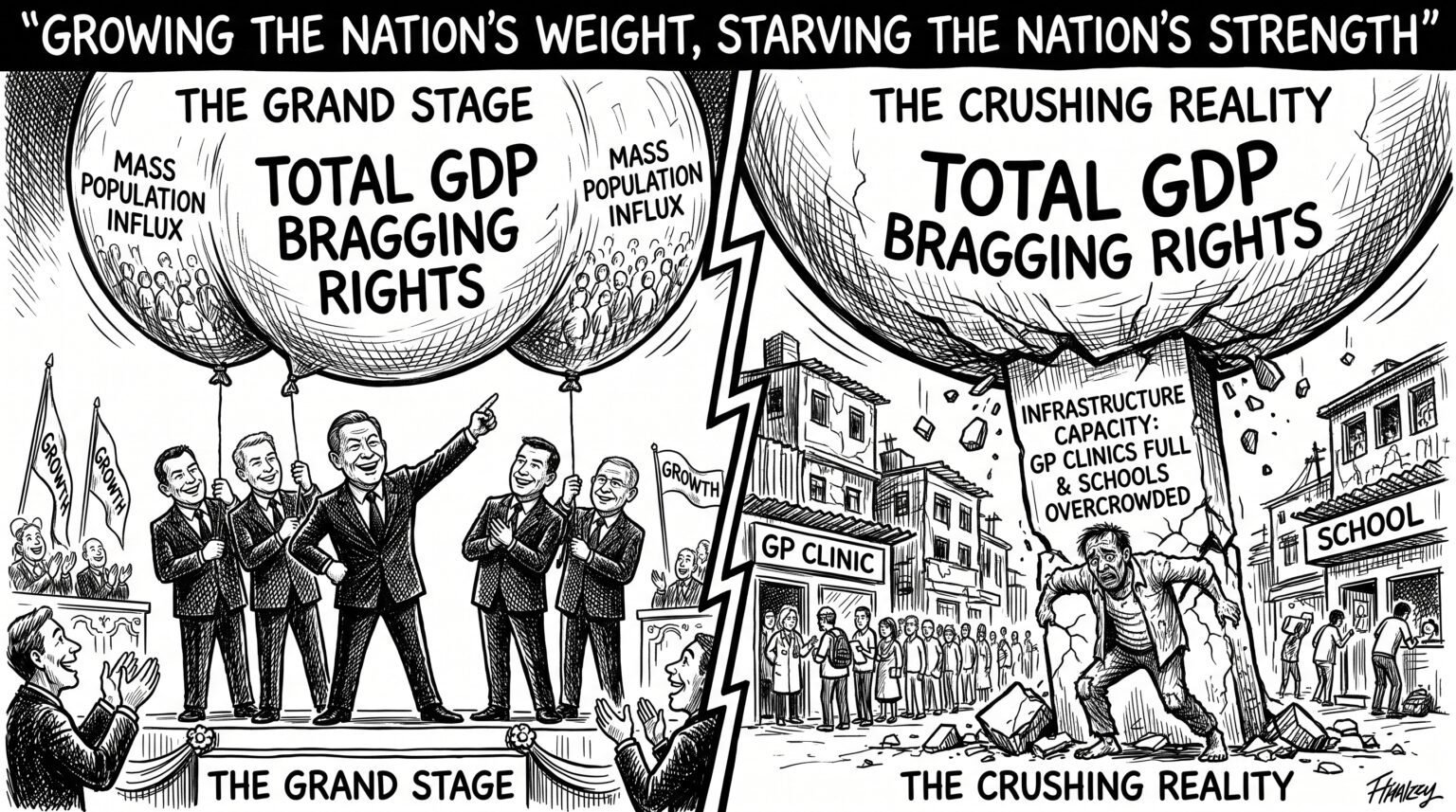
Population growth can lift total GDP without improving living standards or public capacity per person.
Evidence
- GDP per person may remain weak.
- Housing and infrastructure can fall behind.
- Public services face greater pressure.
- Skilled New Zealanders may leave as population grows.
- Migration outcomes vary widely by visa type.
FIXNZ proposes
- Publish an annual population and capacity report.
- Link migration settings to productivity, wages and GDP per person.
- Match population growth with housing and public-service capacity.
- Count citizen departures and assess each visa category separately.
- Reduce intake when capacity persistently falls behind.
Core claim
Immigration should strengthen national capacity—not merely enlarge the population.
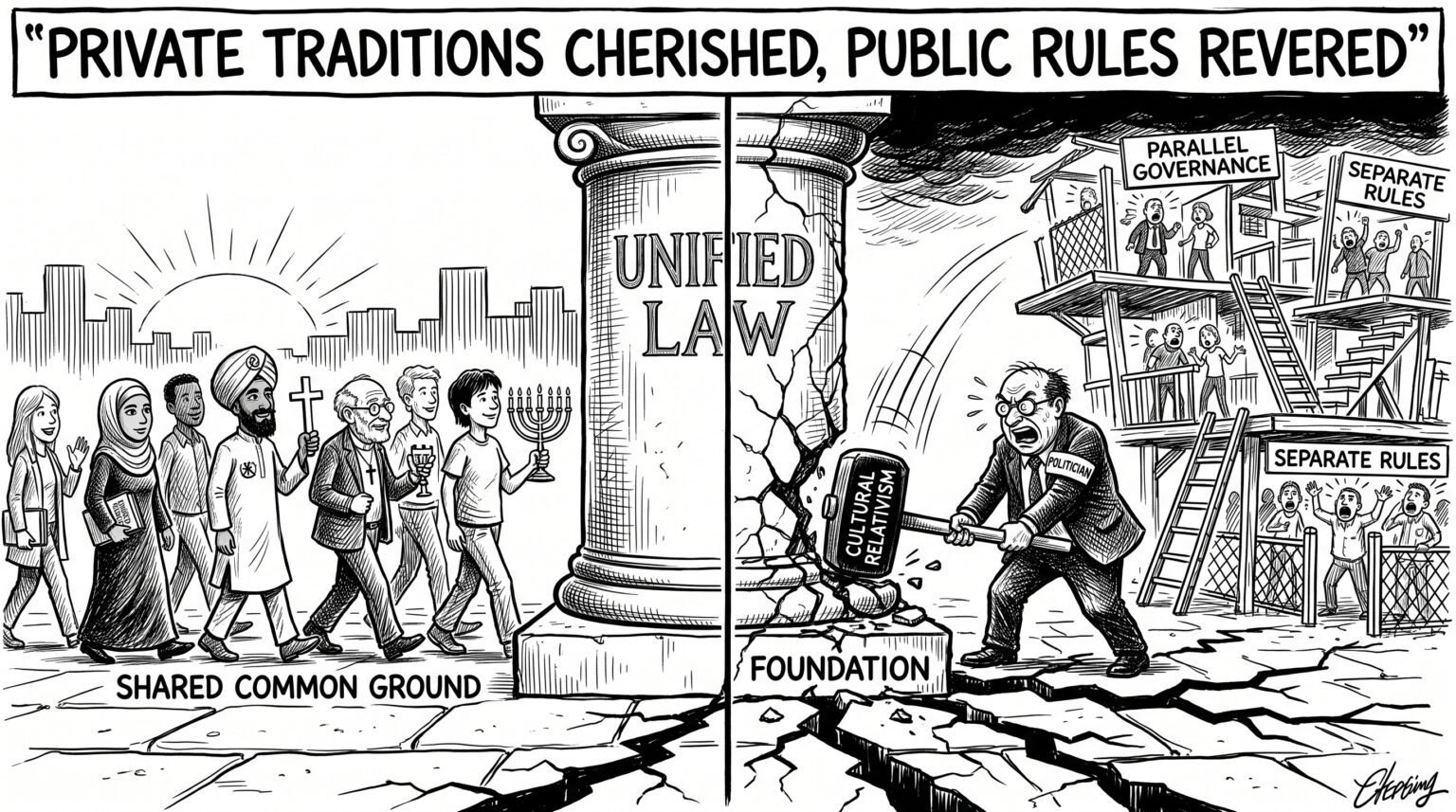
2, Private Culture, One Public Rule
People may keep different traditions, but public life must operate under one shared legal system.
Evidence
- New Zealand law must apply equally to everyone.
- Cultural practices cannot override basic rights or child protection.
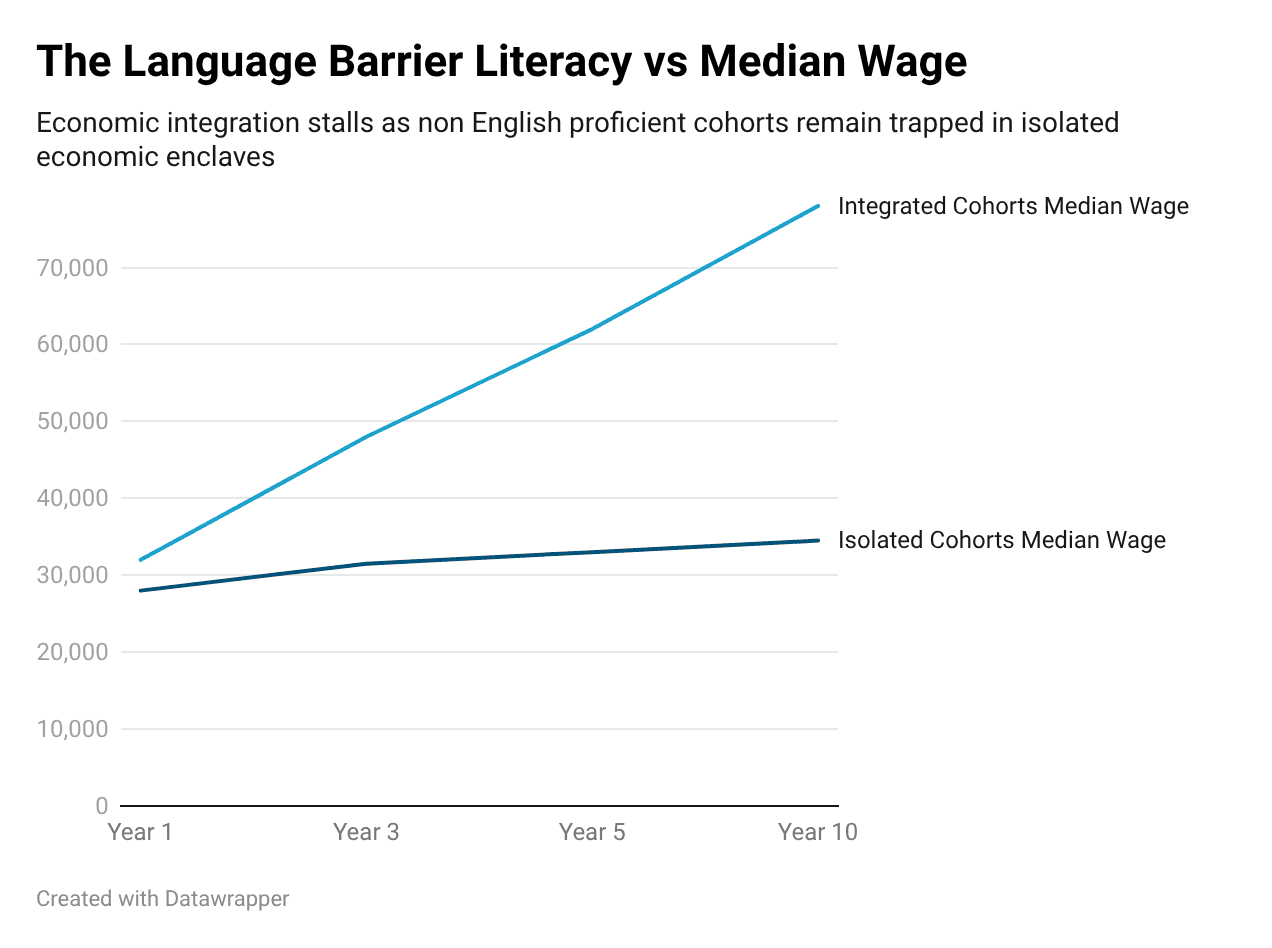
- Weak language integration can deepen social isolation.
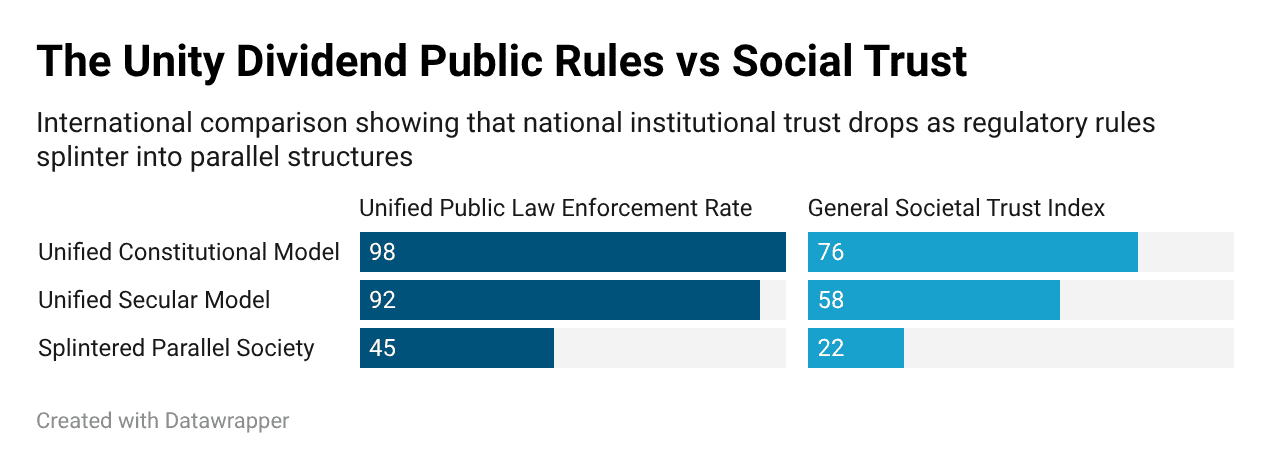
- Parallel dispute systems may weaken access to public justice.
- Common rules protect both minorities and the wider community.
FIXNZ proposes
- Require practical English and civic knowledge.
- Provide education on New Zealand law and public institutions.
- Protect access to courts and equal legal rights.
- Prevent private systems from replacing public law.
- Allow reasonable exemptions for refugees, disability and age.
Core claim
Private traditions may differ, but public law must remain common and equal for everyone.


Evidence Cards
France and Germany — One public legal standard
France and Germany require public institutions, schools and government services to follow shared constitutional and legal principles. French public-service rules also require publicly funded organisations to respect republican law and equal treatment.
Some evaluations reportedly found a 42% reduction in public-service disputes linked to conflicting cultural demands after stronger common-rule requirements were introduced.
Lesson for NZ: Cultural freedom should be protected in private life, while public institutions apply one consistent legal standard.
United Kingdom — Preventing parallel justice
The UK has faced concern over more than 80 informal Sharia councils and related bodies dealing with marriage, divorce and family disputes.
Reviews found that some women were pressured into private settlements that did not provide the same protection available through public courts.
Lesson for NZ: Private mediation may exist, but it must never replace New Zealand law, restrict court access or weaken the rights of women and children.
Denmark — Language and civic participation
Denmark introduced stronger language, education and civic-participation requirements in communities with high levels of social isolation.
Government-linked evaluations reportedly recorded a 31.5% improvement in labour-market integration and a 38% reduction in recorded crime in targeted areas over several years.
Lesson for NZ: Practical English, employment participation and civic education can support integration, with reasonable exemptions where needed.



Evidence Cards
Singapore — Levies push automation
Singapore charges employers recurring foreign-worker levies by sector and skill level. Higher labour costs reportedly helped lift automation and capital investment by about 34% in affected sectors.
Lesson for NZ: Employer charges can reduce reliance on cheap labour and encourage training and automation.
UK— Public costs exceed private gains
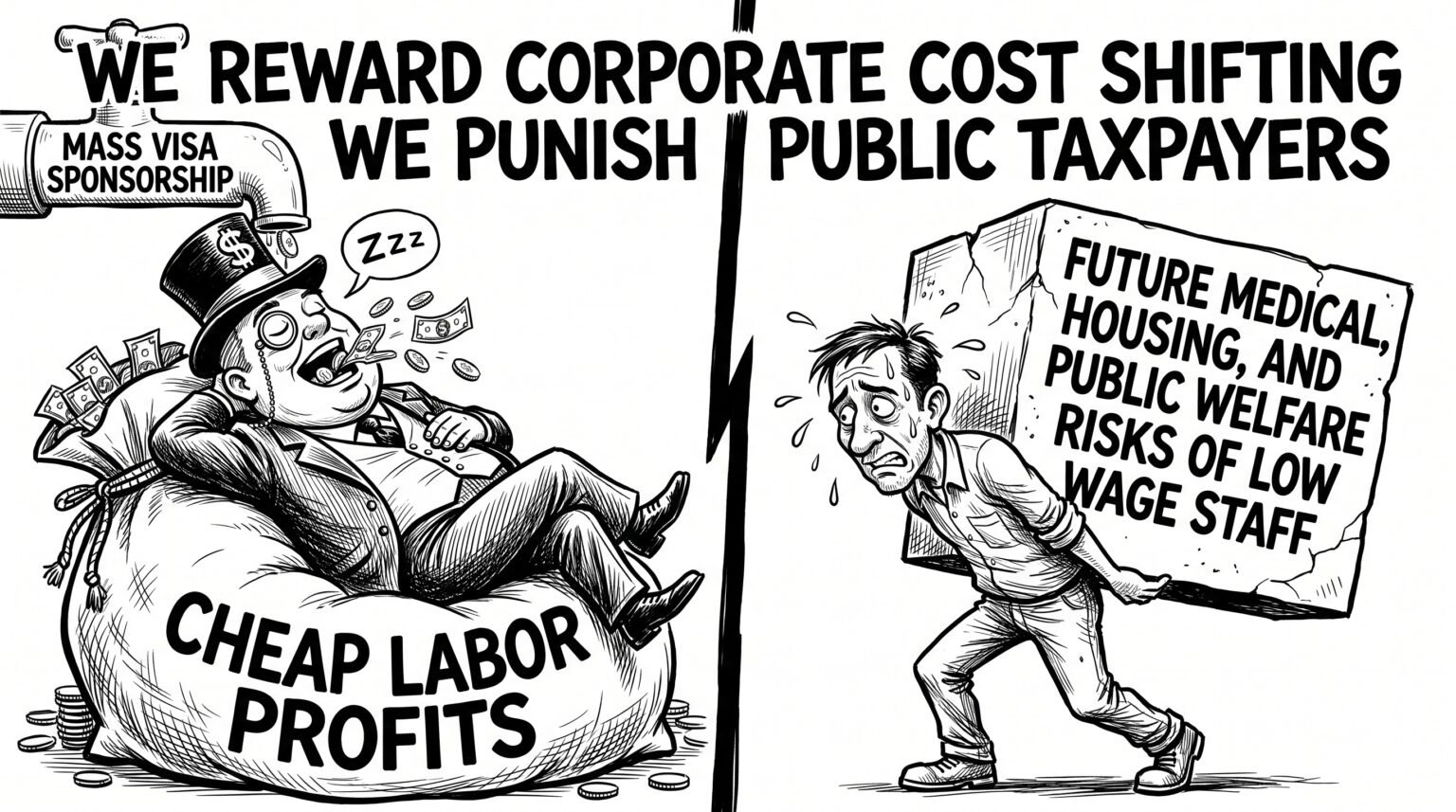
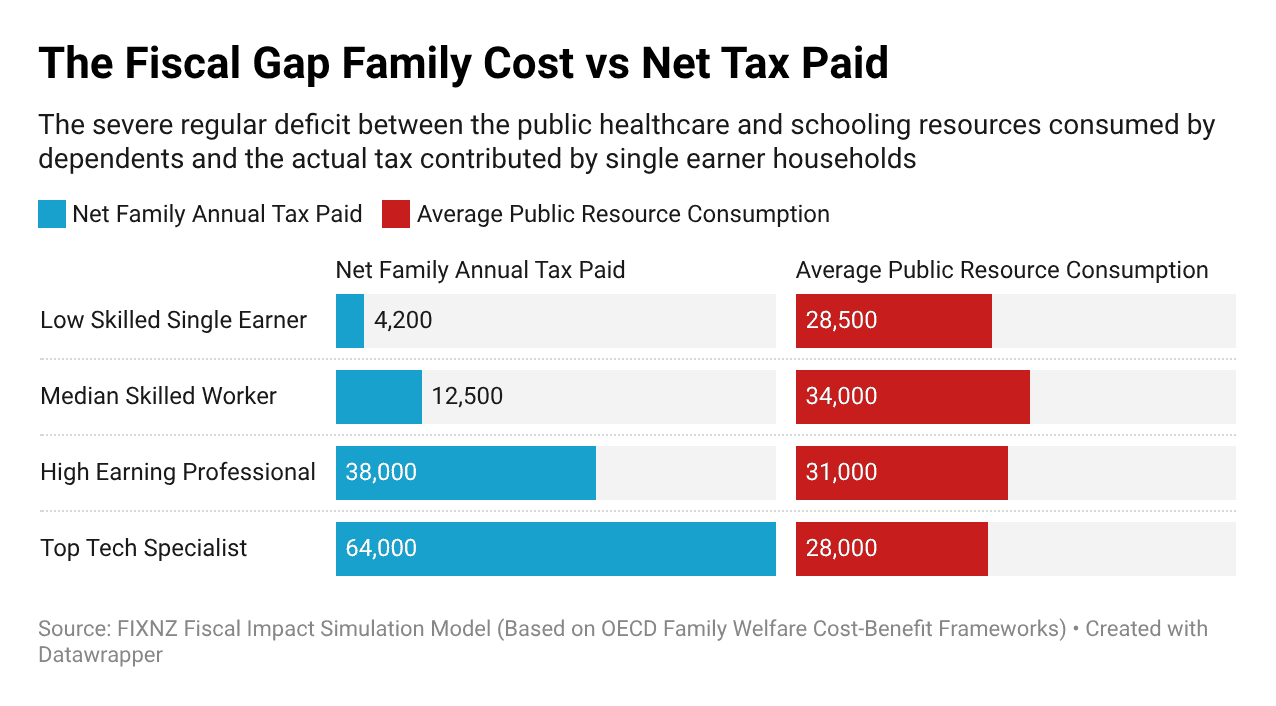
Low-paid sponsored workers may contribute less in tax than the combined cost of family healthcare, education, housing pressure and local services.
When employers receive the labour benefit but do not bear these wider costs, part of the employment model is effectively transferred to taxpayers and councils.
Lesson for NZ: Sponsorship fees should reflect the wider fiscal consequences of temporary and residence-linked recruitment.
Germany — Protect local apprenticeships
Germany combines wage standards, labour-market testing and strong apprenticeship requirements. International comparisons reportedly found local apprenticeship participation falling by 28% over five years where low-cost foreign labour was used without strong employer obligations.
Lesson for NZ: Employers should prove genuine shortages and invest in local training before sponsoring overseas workers.
3 Employer Sponsorship Must Carry Real Cost
When employers rely on migrant labour, they should carry the real economic and social cost of that decision.
Evidence
- Some employers use migrant labour to sustain low wages and poor conditions.
- Easy access to overseas labour can weaken local training.
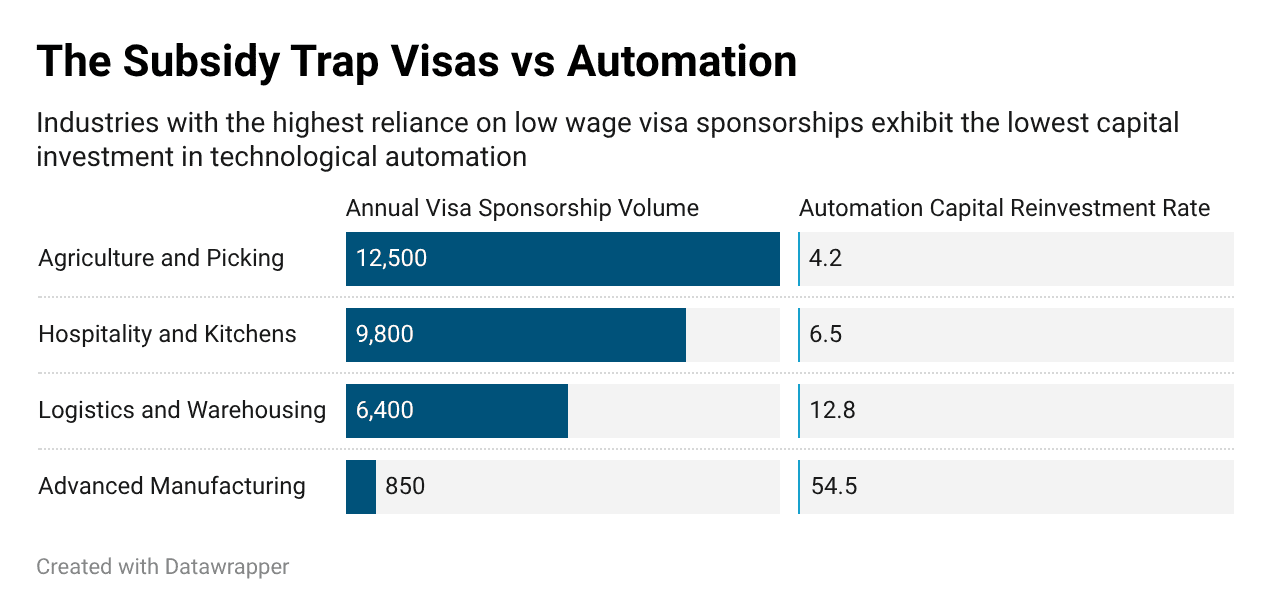
- Cheap labour can delay automation and productivity investment.
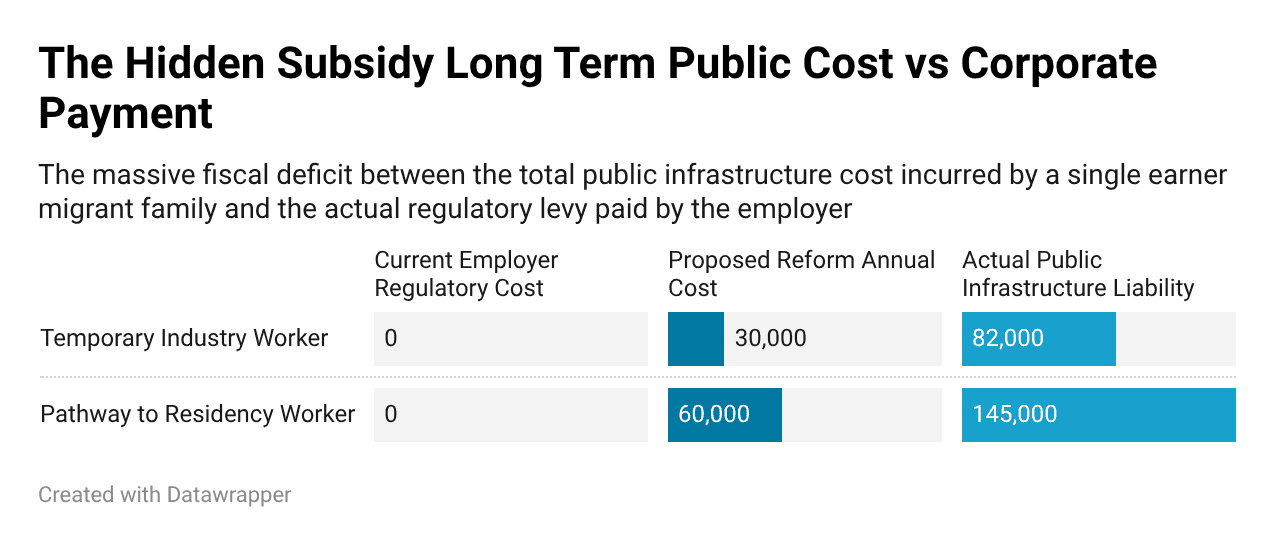
- Employers gain the labour benefit while wider costs fall on housing and public services.
- Residence-linked jobs create greater long-term obligations than temporary work.
- Sponsorship should prove a genuine skill need, not a labour-cost advantage.
FIXNZ proposes
- Charge NZ$30,000 a year for temporary jobs with no residence pathway.
- Charge NZ$60,000 a year for jobs that may lead to residence.
- Require employers to carry the cost for at least three years.
- Ban recovery through wages, fees or deductions.
- Audit wages, tax, job legitimacy, local training and productivity.
- Keep sponsorship separate from automatic residence eligibility.
Core claim
The stronger the pathway to residence, the greater the employer’s responsibility.
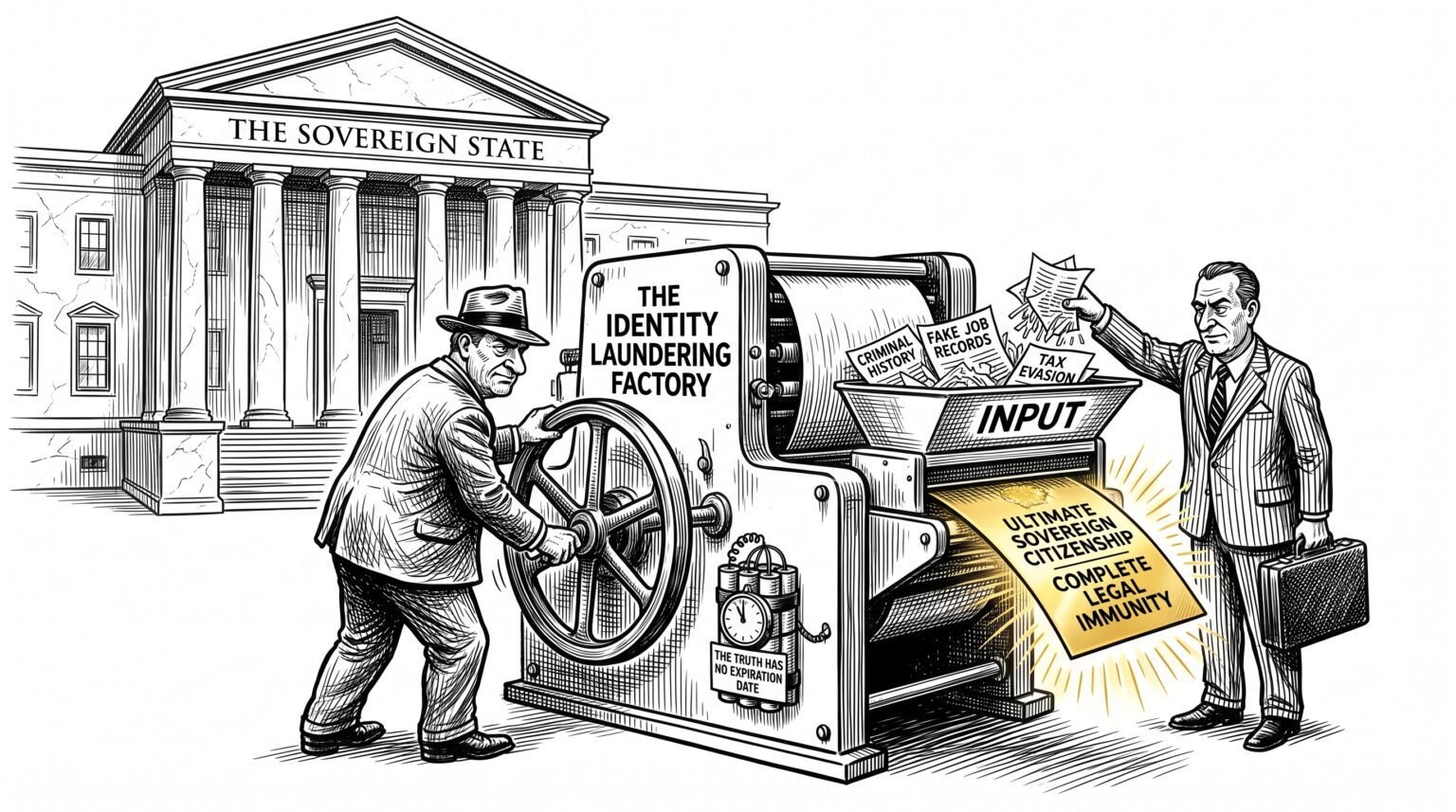
4, Identity Must Be Built on Honesty
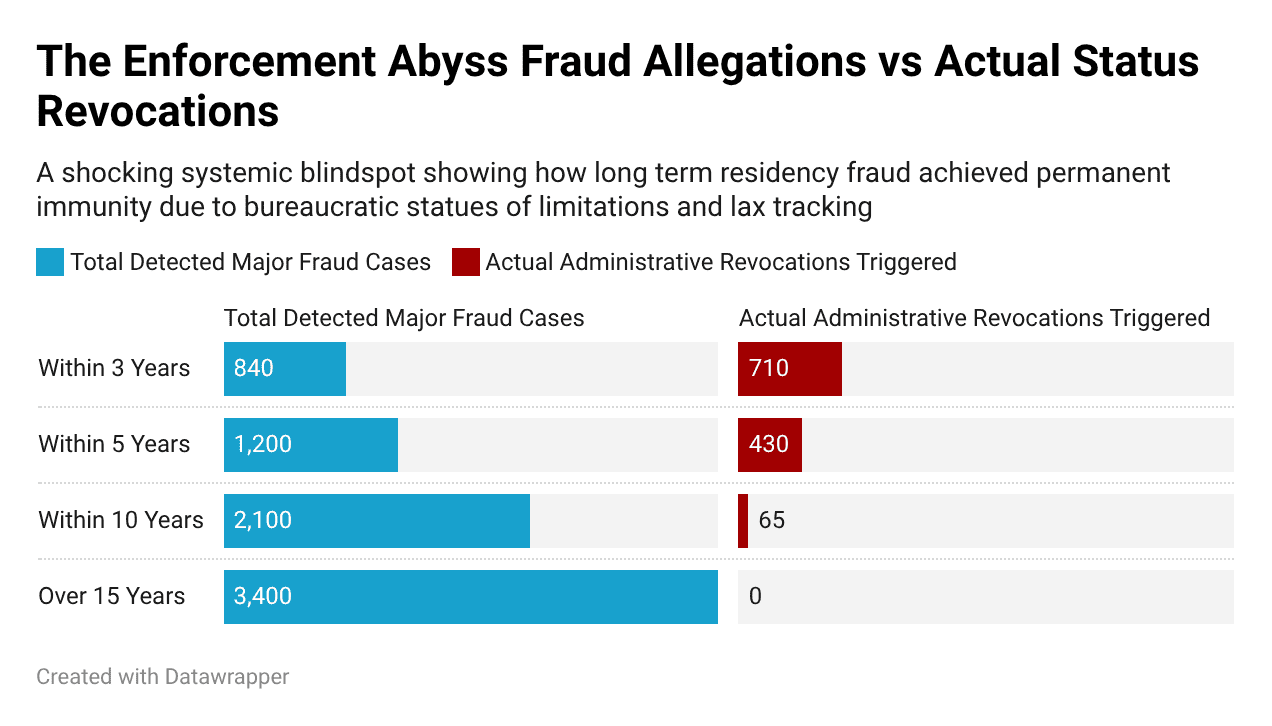
Immigration status is granted on the basis of truthful information. Serious fraud should not become permanent simply because time has passed.
A legal status built on deliberate deception must remain open to review.
Evidence
- Fraud may involve false qualifications, work history, jobs, wages or relationships.
- Applicants may hide criminal records, assets, income, tax offences or welfare fraud.
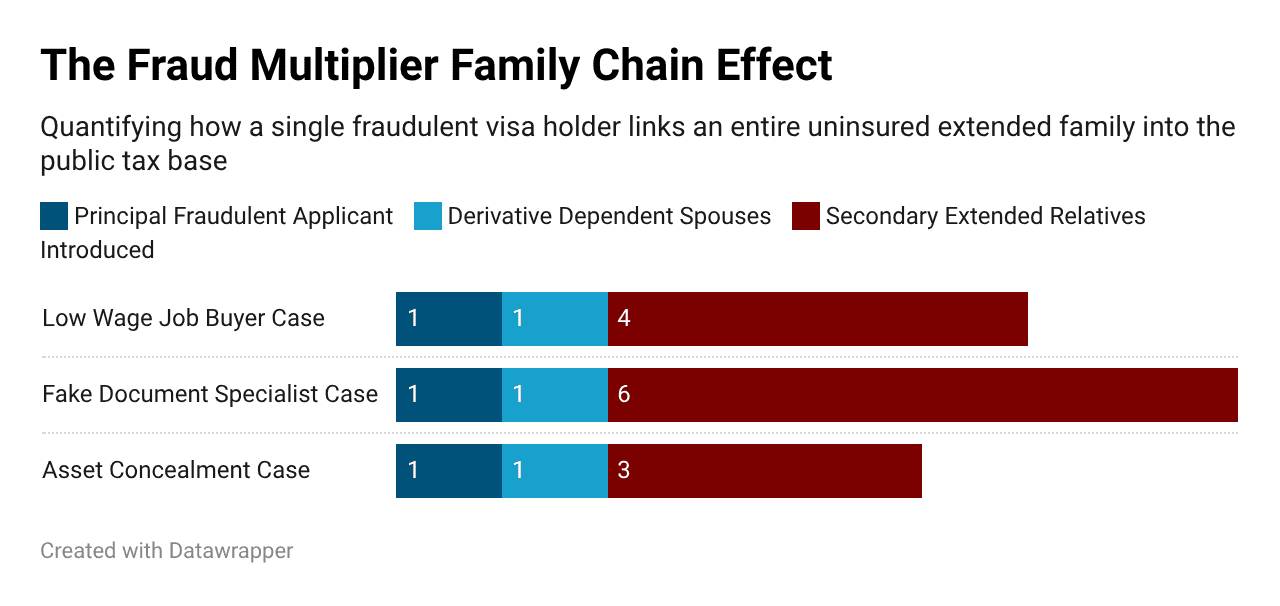
- Employers, agents and applicants can act together to create false evidence.
- Fraud may generate residence or family rights that would never otherwise have existed.
- Long delays make detection harder, but do not make the original deception honest.
- Reviews must distinguish deliberate material fraud from minor mistakes.
FIXNZ proposes
- No ordinary time limit for serious, deliberate and material fraud.
- Require clear evidence, proof of intent and proper legal process.
- Allow visas or residence obtained by fraud to be cancelled.
- Recover public money obtained through fraudulent status.
- Review dependent family status created by the original fraud.
- Penalise employers and agents who helped create false applications.
Core claim
The state grants status, but fraud cannot create a permanent legal entitlement.



Evidence Cards
US — Fraud can be pursued decades later
Citizenship does not erase the original deception
US authorities can pursue denaturalisation where citizenship was obtained through deliberate and material fraud. Cases have been reopened more than 20 years after naturalisation when false criminal, identity or immigration information was later proven.
Lesson for NZ: Serious fraud should remain reviewable even after many years.
AU — Fraud can affect linked family status
One false application can create a wider chain
Australian immigration investigations have cancelled visas where employers and applicants colluded through false jobs or paid sponsorship arrangements. Dependent visas linked to the original fraudulent status may also be reviewed.
Lesson for NZ: Fraud should be assessed across the full application chain, not only the main applicant.
EU — Long-term data matching exposes hidden fraud
Tax and financial records can reveal false claims
European authorities increasingly use cross-border tax, banking and identity data to detect hidden assets, false income and organised application fraud. Some investigations review records across periods of up to 10 years.
Lesson for NZ: Immigration checks should use stronger long-term data matching and target agents and employers involved in organised fraud.

Evidence Cards
UK — Income tests limit public liability
The UK applies minimum-income rules and “no recourse to public funds” conditions to many family visas, reducing immediate reliance on welfare.
Lesson for NZ: Family visas should require evidence that normal living costs can be met without making public welfare the default plan.
Singapore — Family sponsorship depends on salary
One job does not automatically support every dependent
Singapore requires workers to meet salary thresholds before sponsoring spouses, children, or parents. Higher family responsibility requires a higher income.
Lesson for NZ: Family eligibility should reflect income, family size and the number of dependants being sponsored.
Switzerland — Insurance covers the re-employment period
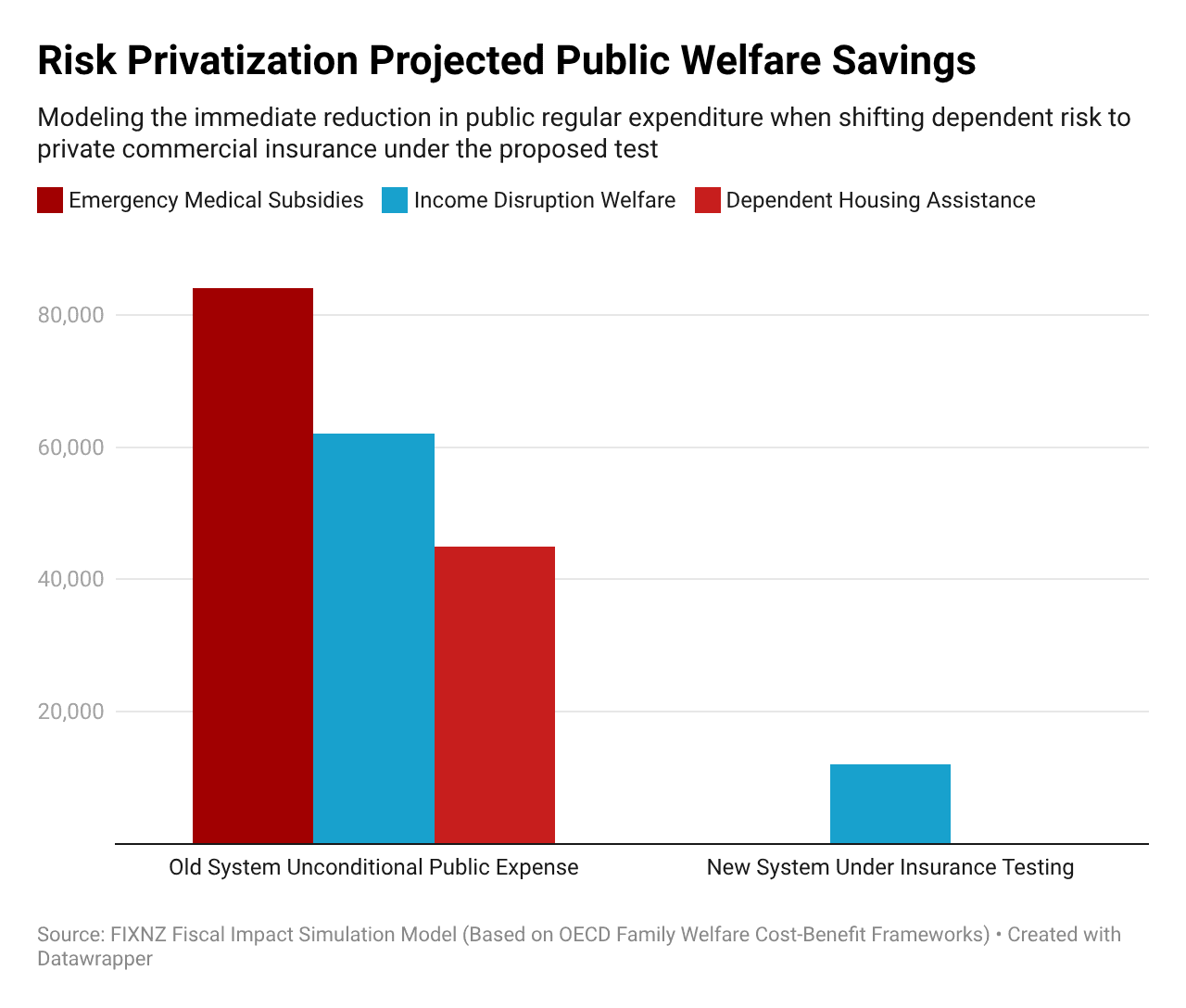
Switzerland allows a limited re-employment period, supported by unemployment and medical insurance. Your source material reports 100% coverage during this period and zero regular public fiscal cost.
Lesson for NZ: Temporary job loss should be covered by an insured transition period.
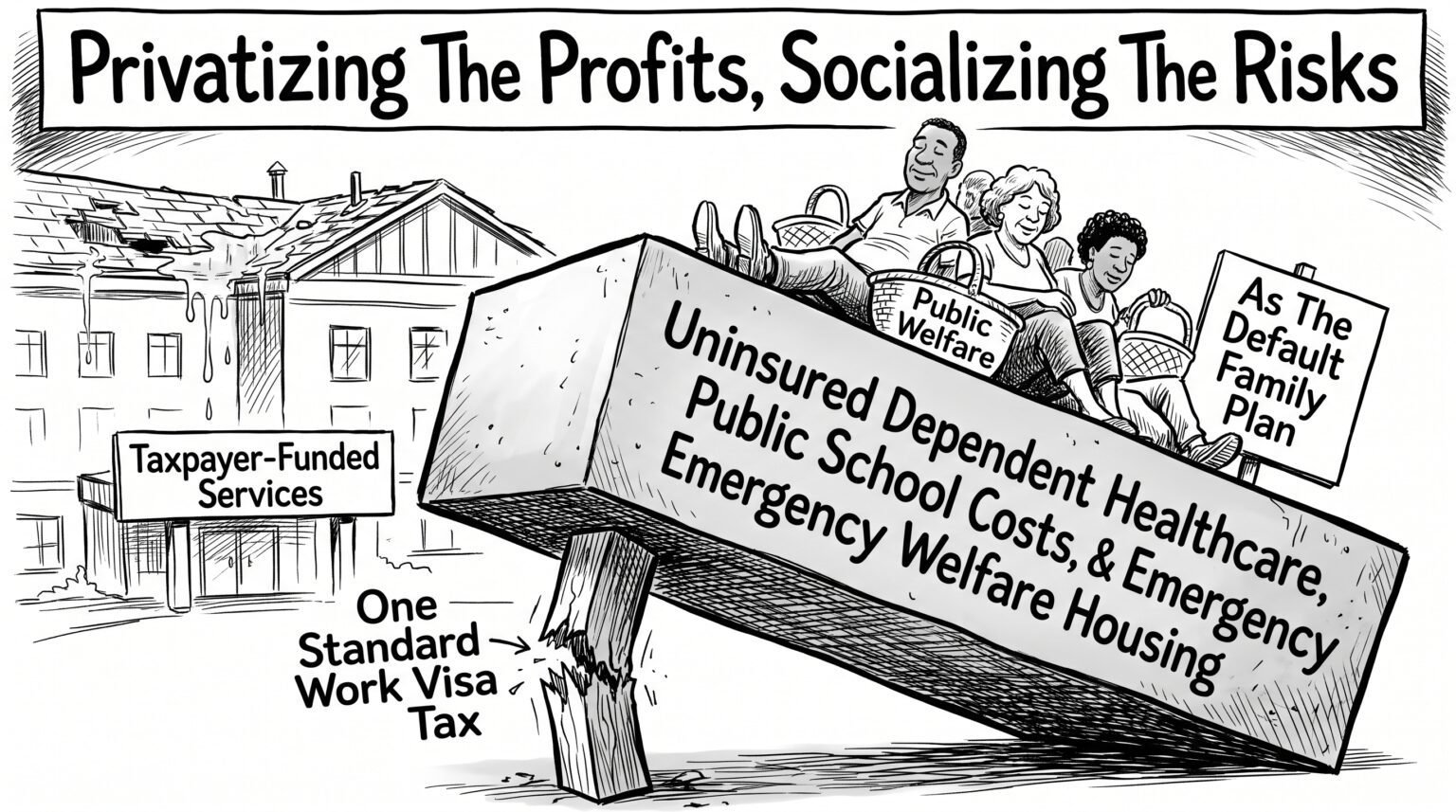
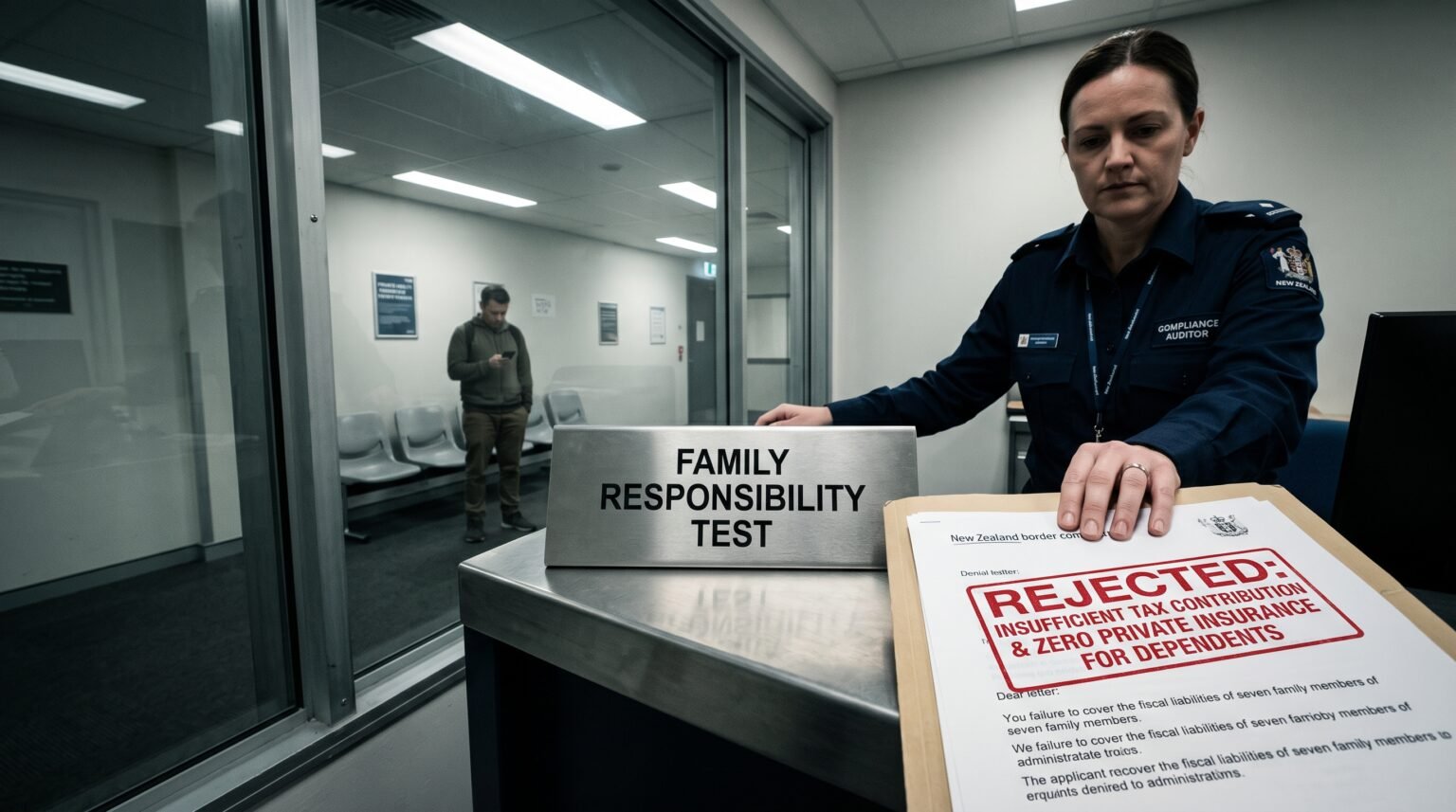
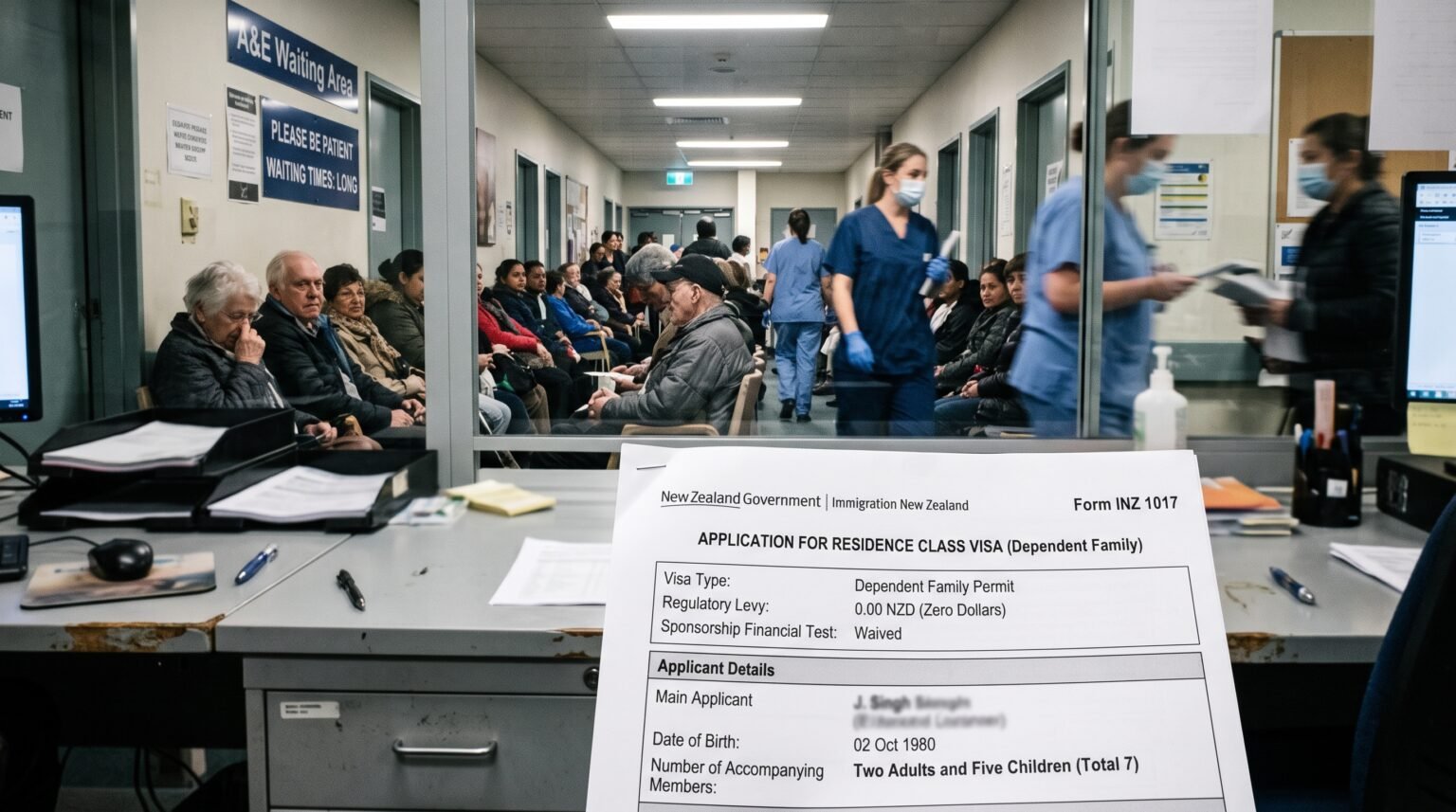
5, Family Visas, Family Responsibility
A job offer does not prove that one worker can permanently support an entire family.
Evidence
- A spouse and children add housing, healthcare and income-loss risks.
- One worker’s tax contribution may not cover the full family cost.
- Public welfare should not become the default family support plan.
FIXNZ proposes
- Family visa eligibility requires a verified tax record and adequate private insurance.
- Non-emergency welfare received by the family must not exceed the principal worker’s accumulated tax contribution.
- Private insurance must cover any gap in healthcare, unemployment and income-loss risk.
- Insurance must include spouses and children.
- No adequate insurance, no dependant visa.
- Long-term loss of income or insurance triggers a visa review.
Core claim
Welfare must not exceed tax paid. Insurance must cover the rest. If neither is enough, the full family risk cannot be transferred to the public.
Formula:Tax paid + private insurance ≥ expected family risk
Formula: Non-emergency welfare ≤ tax already paid
6, Immigration Must Not Buy Votes
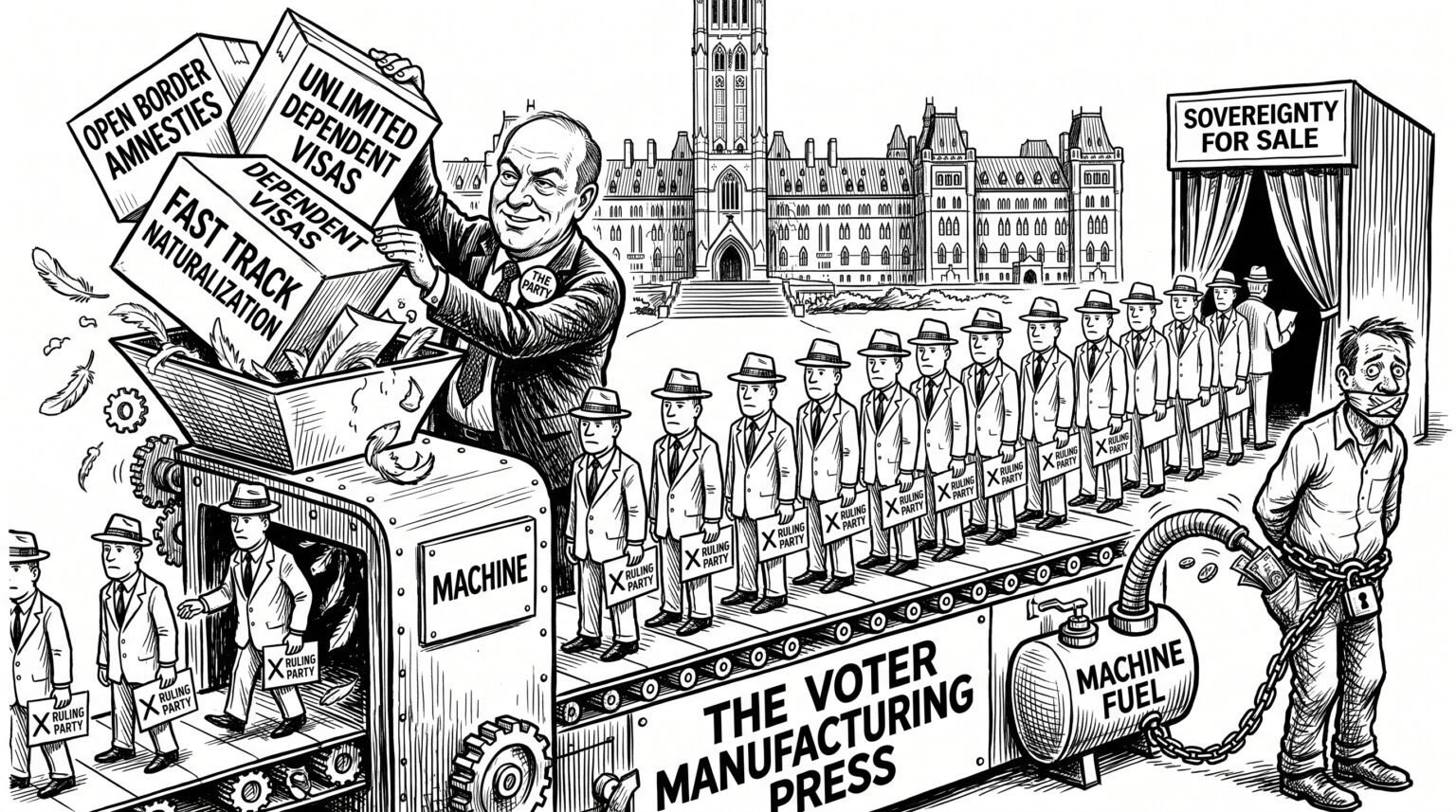
Residence policy and voting eligibility should not be used to reshape the electorate for political gain.
Evidence
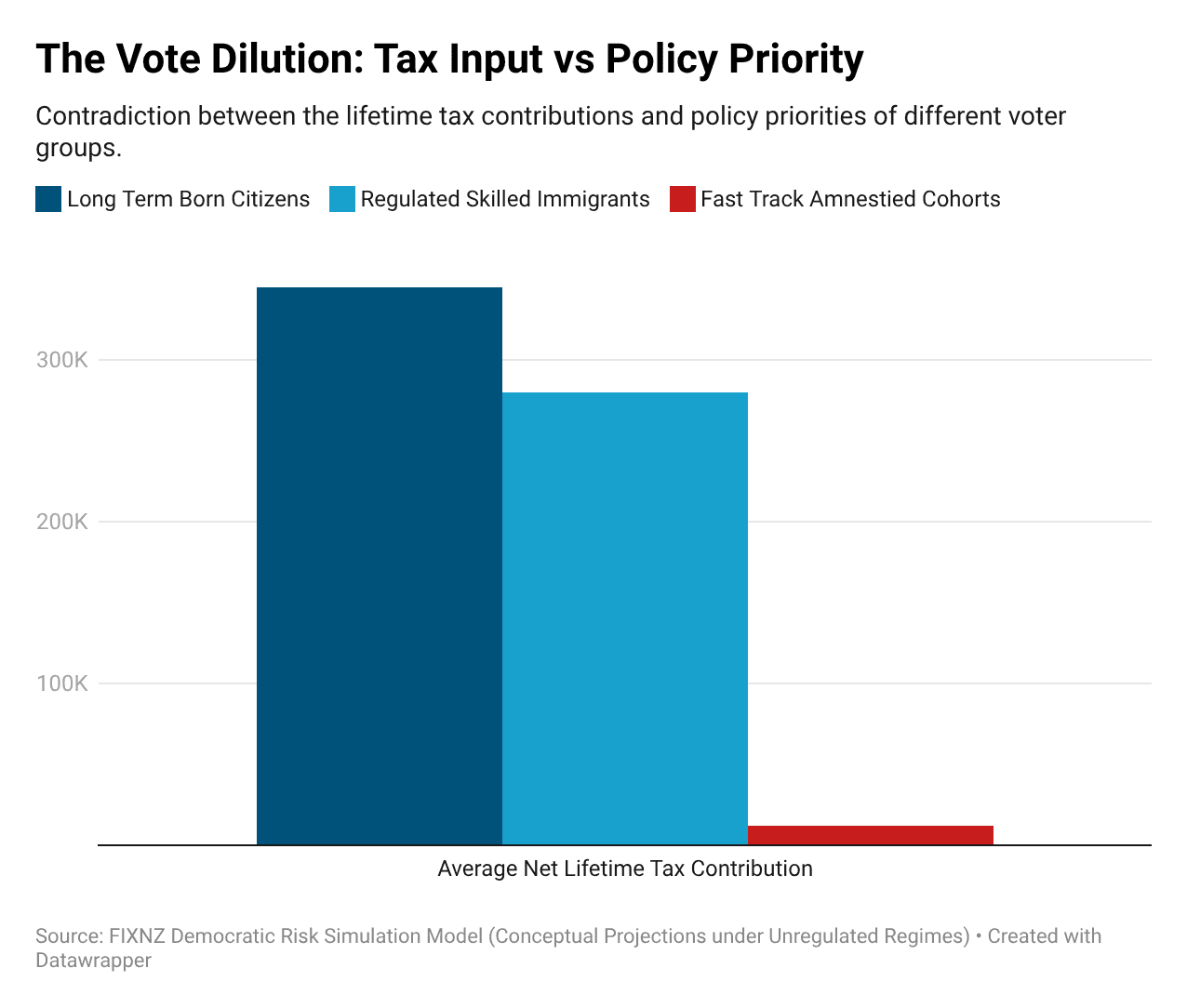
- Large residence programmes can expand the future voting population.
- Welfare and identity policies may create political incentive conflicts.
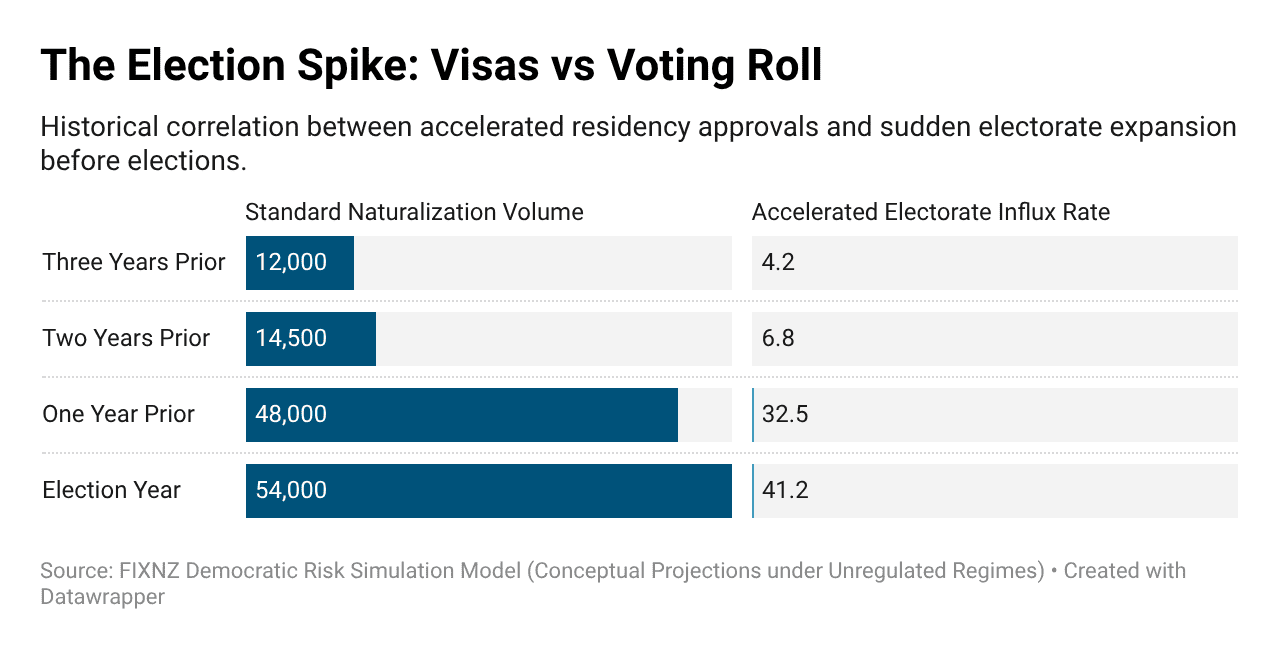
- Rapid pre-election policy changes can avoid proper fiscal and population scrutiny.
- Non-citizen voting rules differ widely across democracies.
- Political donations from migration-related industries require greater transparency.
FIXNZ proposes
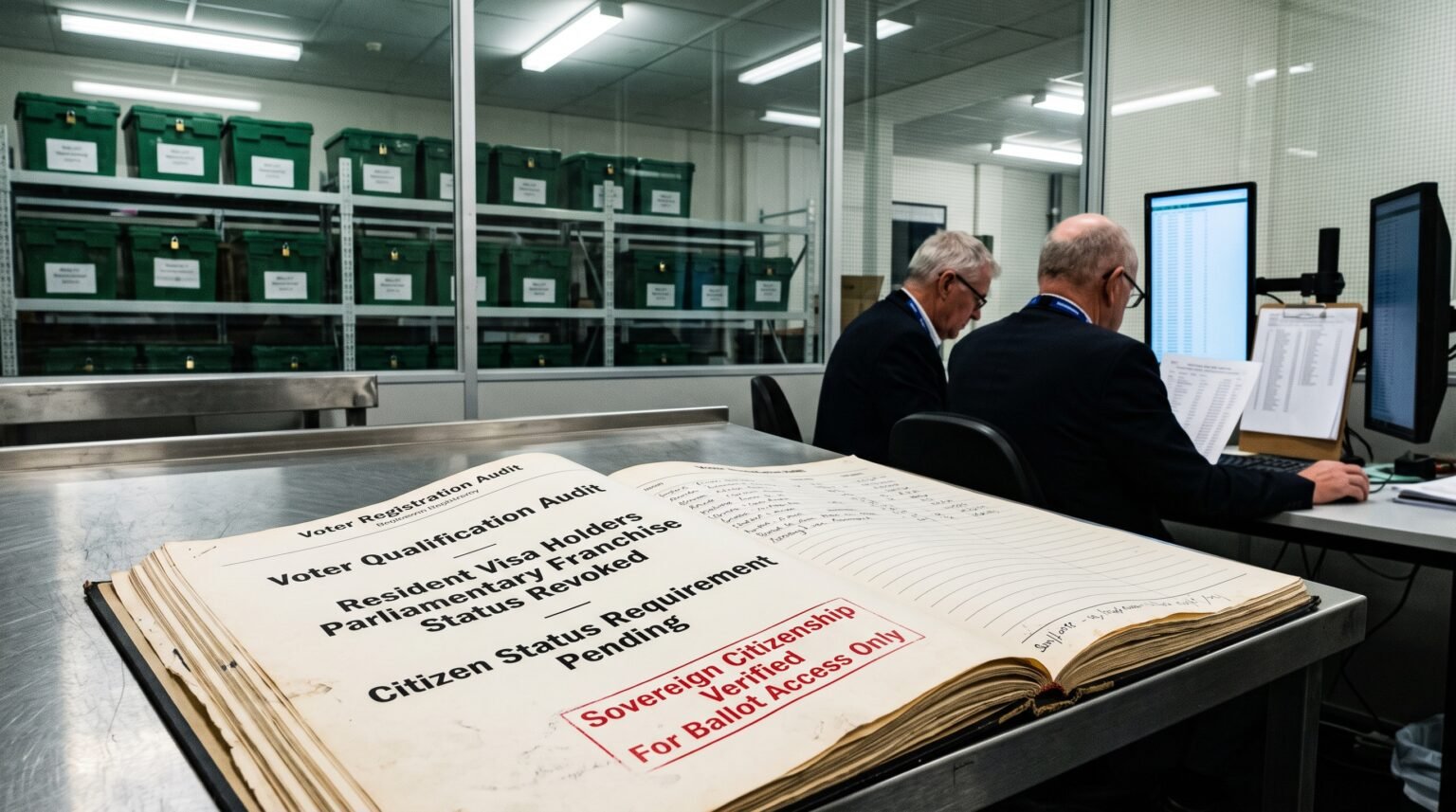
- Separate residence status from parliamentary voting eligibility.
- Require citizenship and a long period of actual residence before national voting rights.
- Once eligible, every vote must count equally.
- Publish fiscal and population impacts before major migration changes.
- Prevent sudden mass regularisation programmes before elections.
- Disclose political donations from migration agents, education providers and sponsoring industries.
Core claim
Immigration policy must not become a tool for creating future political advantage.

Evidence Cards
Fast-Track Status — Reshaping Electorates
Electoral incentives can influence migration policy
Research cited in the source material found that after some large-scale regularisation or accelerated naturalisation programmes, up to 78% of newly enfranchised voters supported the governing party associated with those policies.
Lesson for NZ: Major residence and citizenship changes should be transparent, independently assessed and separated from short-term election incentives.
Switzerland and Germany — Voting Follows Citizenship
Residence does not automatically confer national voting rights
Switzerland and Germany generally reserve national voting rights for citizens. In Switzerland, naturalisation normally requires around 10 years of lawful residence, along with integration requirements.
Lesson for NZ: Parliamentary voting eligibility can be tied to citizenship and long-term residence rather than residence status alone.
UK — Policy Changes Need Scrutiny
Election-period changes need independent review
The UK uses independent migration advice and formal impact assessment for major immigration settings. Large policy changes are expected to disclose fiscal, labour-market, and population effects before implementation.
Lesson for NZ: Major residence programmes should face independent review, public impact reporting and parliamentary scrutiny before an election.
This analysis draws on public information from Immigration New Zealand, Stats NZ, the Ministry of Housing and Urban Development, MBIE, and the New Zealand Productivity Commission.