










New Zealand Housing Reform
FIXNZ examines New Zealand housing reform through evidence on land planning, infrastructure funding, housing finance, approval costs, rental security and access to ownership.




Evidence Cards
Switzerland — Targeted mortgage controls
Targeted mortgage controls
Switzerland uses sector-specific capital requirements and stricter mortgage-lending rules to curb excessive housing credit growth.
Lesson for NZ
Bank credit can be guided away from property concentration without cutting off productive business finance.
Germany — Long-term productive capital
Long-term capital for productive firms
Germany’s public and regional banking system supports Mittelstand firms, advanced manufacturing and export-oriented production.
Lesson for NZ
A country can build wealth through productivity, not property inflation.
Singapore — Anti-speculation tax tools
Making speculation less attractive
Singapore uses stamp duties and macroprudential controls to reduce multi-property speculation.
Lesson for NZ
Tax and credit rules can change where capital flows.
1, When Property Becomes the Economy
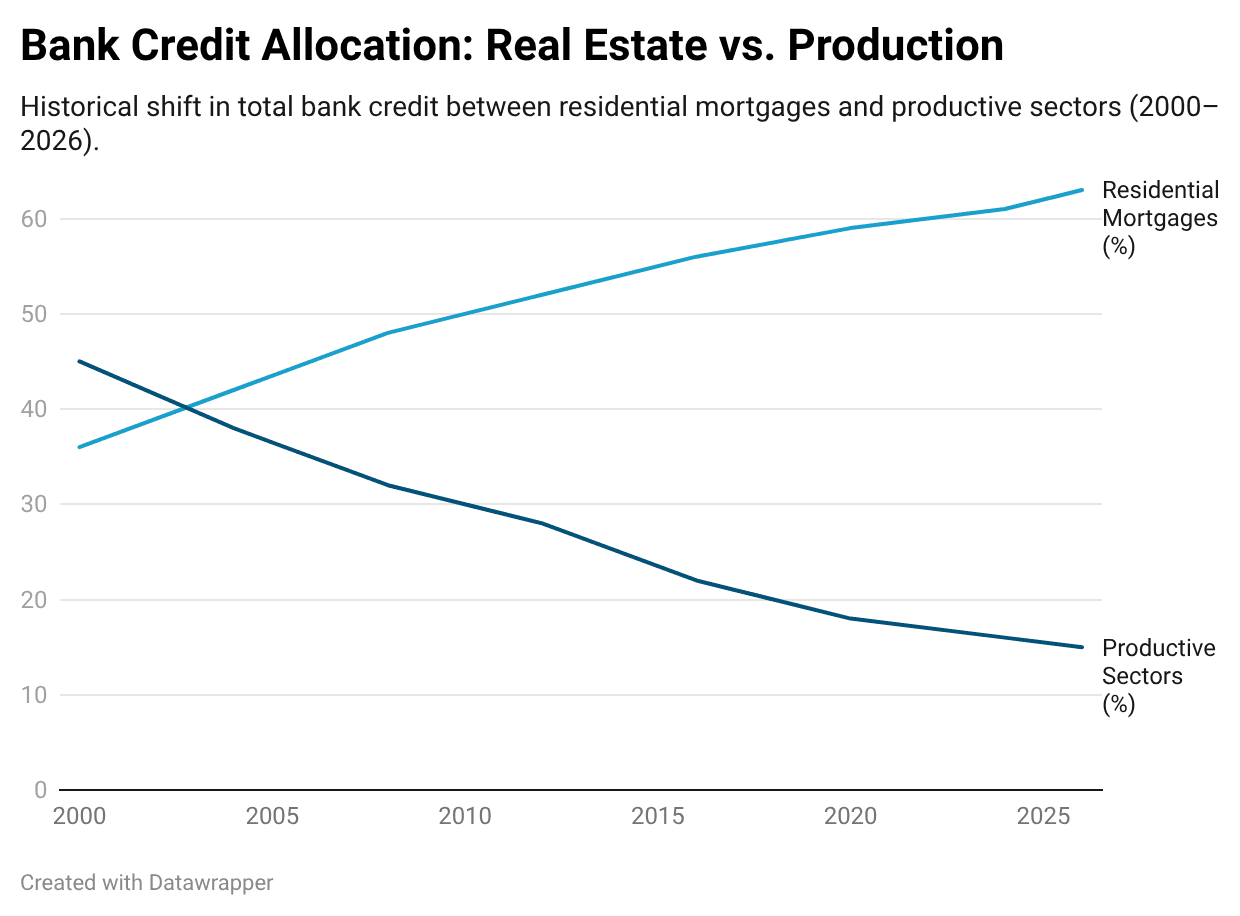
Bank credit, household wealth and national capital are flowing into property, while production is left behind.
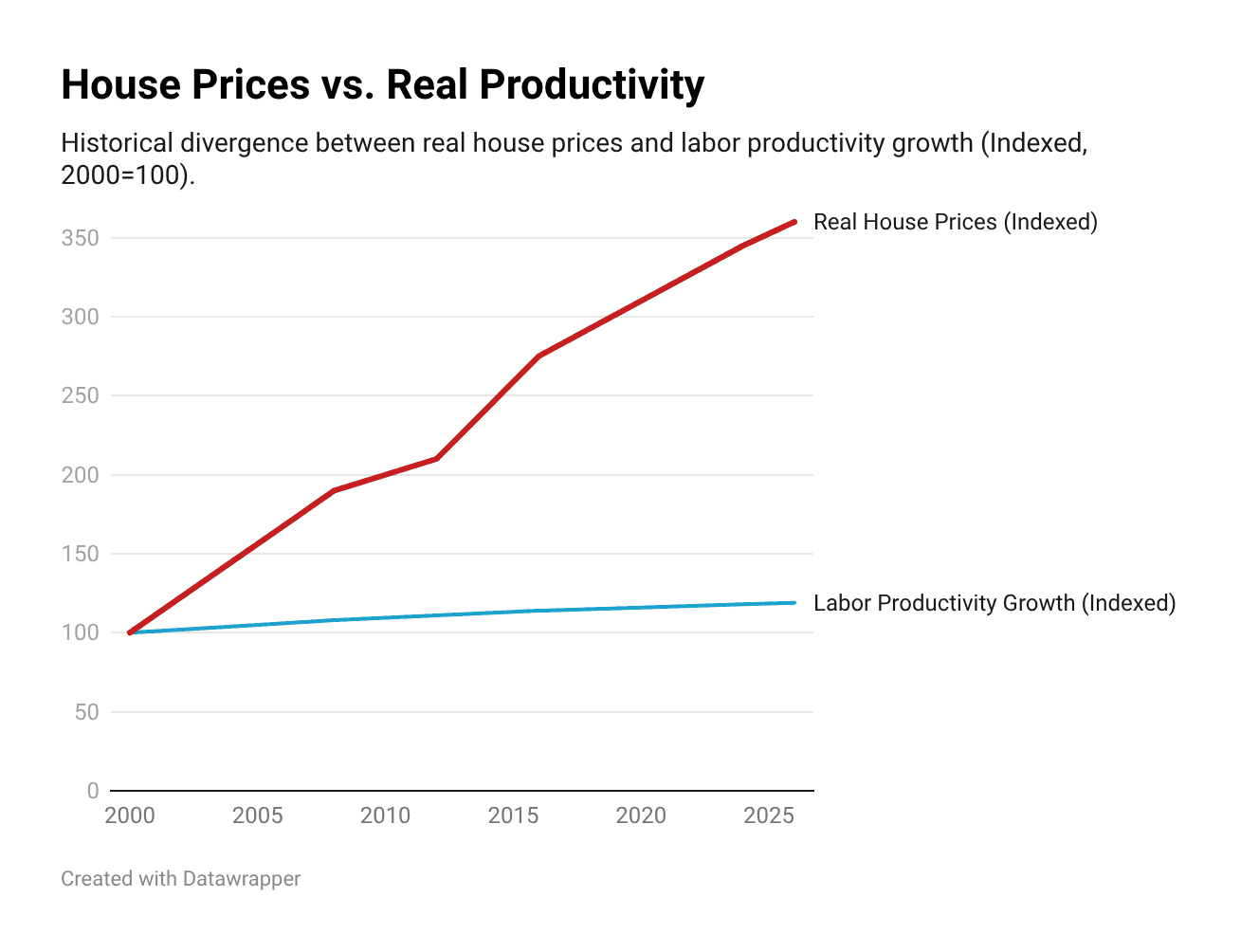
House prices rise. Productivity does not.
Evidence:
• Bank credit is increasingly concentrated in residential mortgages.
• Real house prices have outpaced real productivity.
• Productive sectors need long-term capital.
FIXNZ proposes:
• Redirect capital into manufacturing, technology, exports and innovation.
• Limit excessive mortgage-credit concentration.
• Build non-property investment channels.
• Shift national targets from house prices to wages and productivity.
Core claim:
National wealth comes from production, not rising house prices.
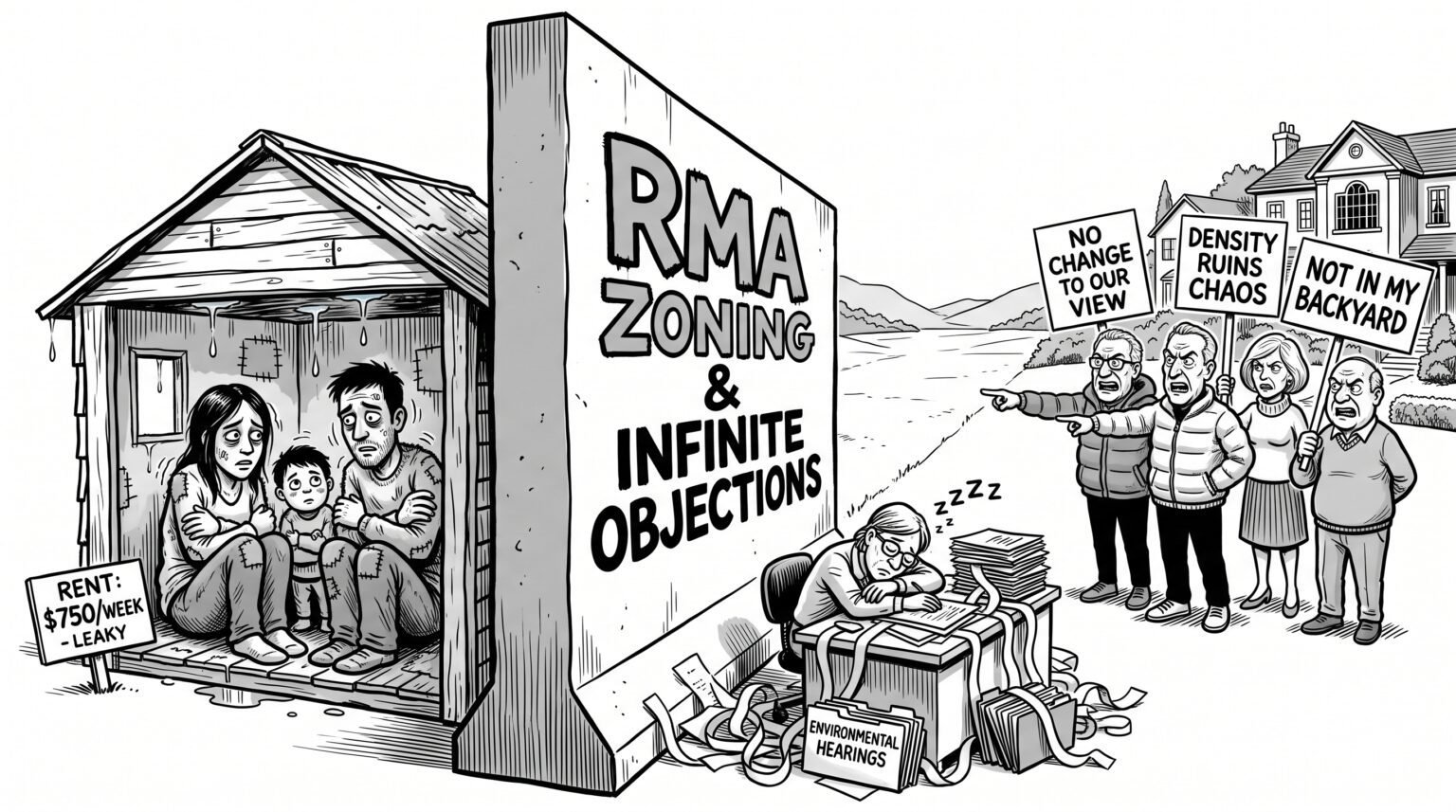
2, The Land Exists. Permission Does Not.
Buildable land is often locked behind planning boundaries, density limits and slow approvals.
The issue is not only land supply. It is permission: too much land cannot be used because zoning, objections and consent processes delay or block development.
Evidence
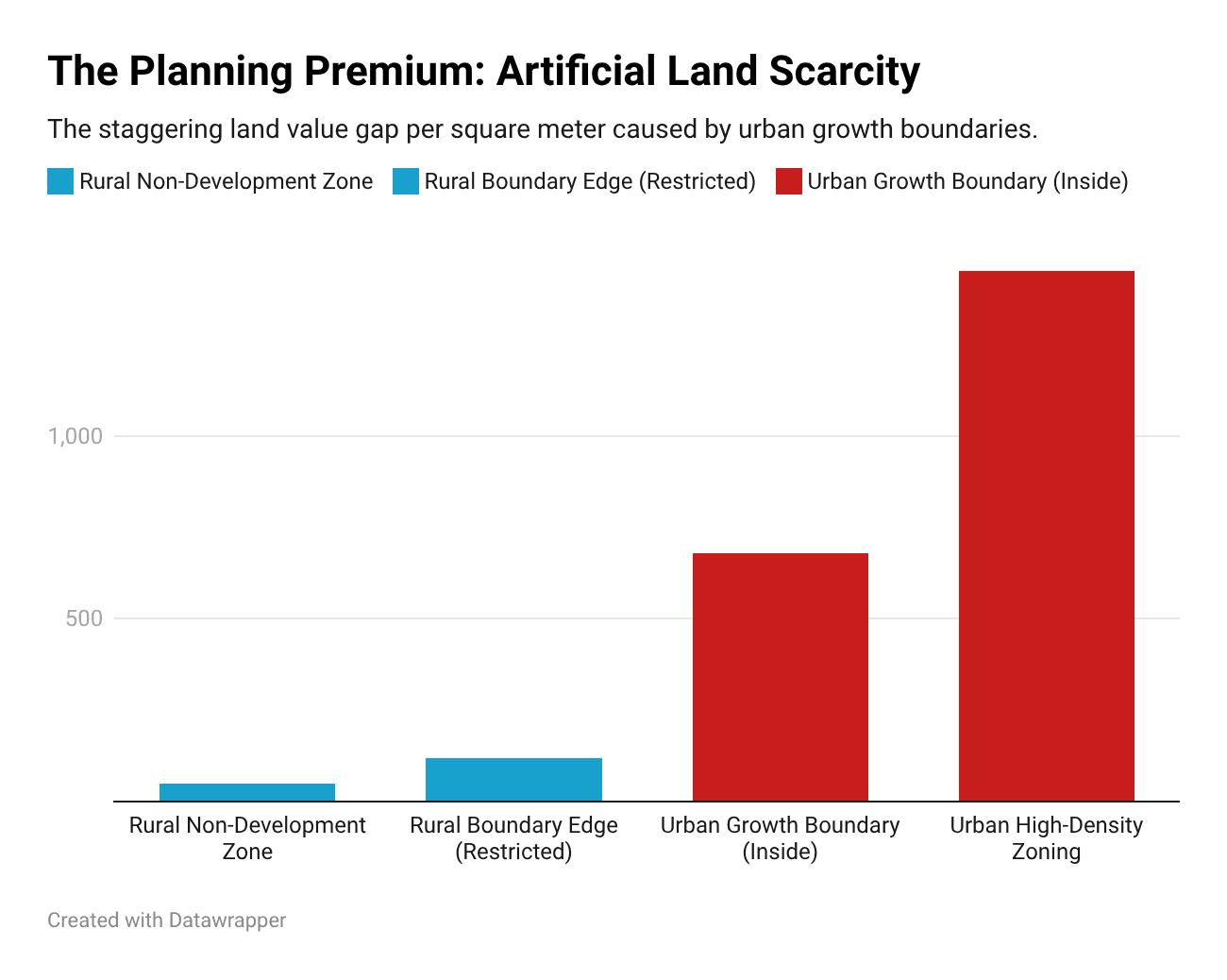
• Planning rules can create artificial scarcity.
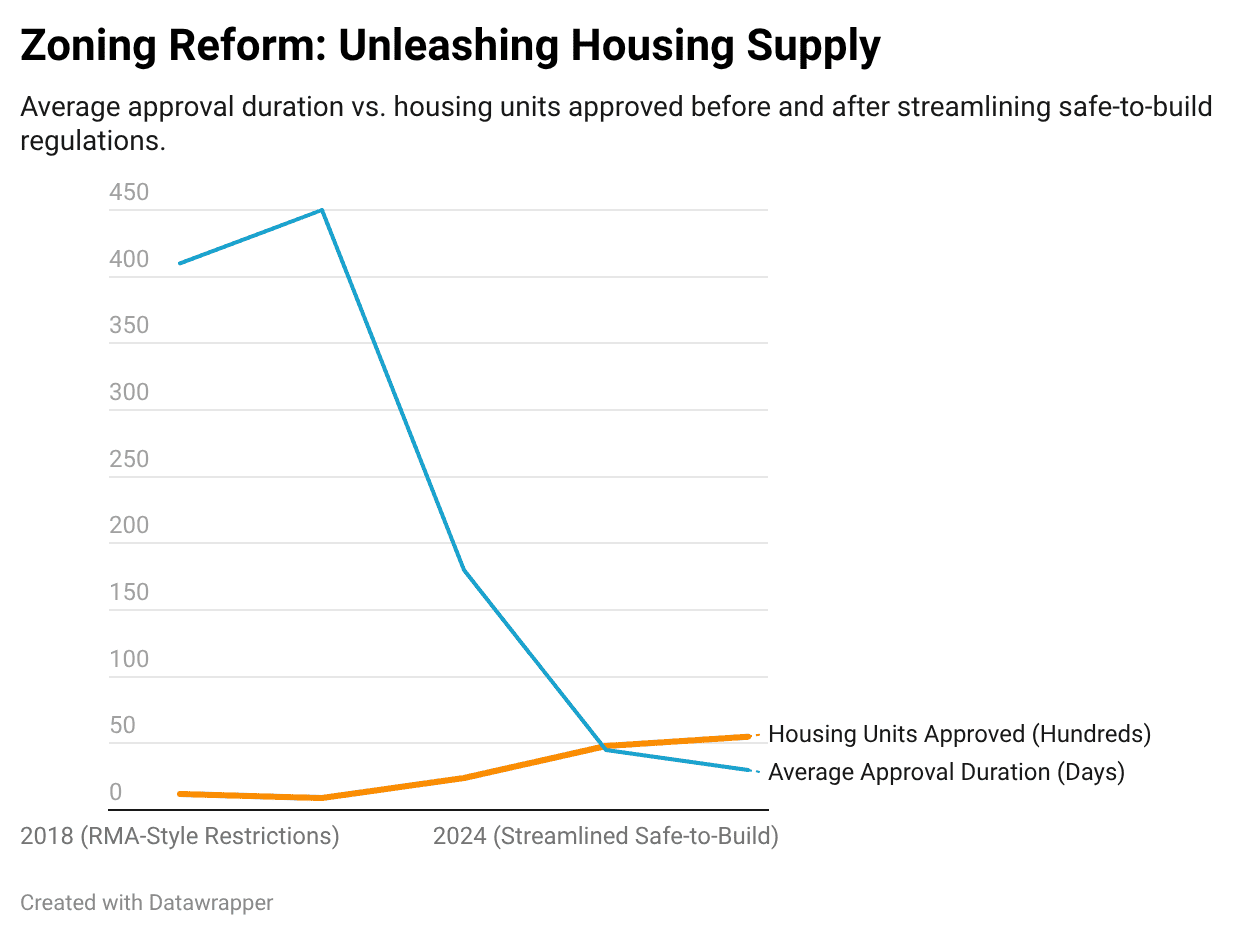
• Objection systems can delay housing supply for years.
• Land values rise when permission is rationed.
FIXNZ proposes
• End unlimited objections and delay.
• Approve projects that meet safety, environmental and infrastructure standards.
• Require objectors to prove direct, material and measurable harm.
• Do not allow density, design change or population growth alone to block housing.
• Penalise malicious obstruction.
• Set fixed approval deadlines.
Core claim
Landowners should be free to build. Public rules should protect safety, infrastructure and the environment — not enforce artificial scarcity.


Evidence Cards
Oregon & California — Ending Exclusionary Zoning
What they did
Oregon and California reduced exclusionary single-family zoning and limited the ability of local opposition to block added housing density.
What changed
More land could legally shift from protected low-density use into housing supply, opening development options that were previously blocked.
Why it matters for NZ
Population growth, density change or neighbourhood preference should not be enough to stop needed housing.
New Zealand — The Planning Premium
What it shows
In New Zealand, restricted land supply can create a planning premium: similar land can carry very different values depending on whether it has permission to be used for housing.
What changed
Land inside urban boundaries can be worth far more than similar land outside them, not because the soil is different, but because one side has development permission and the other does not.
Why it matters for NZ
High house prices are not only a construction-cost problem. They are also a land-permission problem.
Japan — Clear Rules, Faster Building
What they did
Japan uses clearer national zoning categories and more predictable approval rules, reducing local obstruction and uncertainty.
What changed
In major cities such as Tokyo, housing supply has been able to respond more quickly when projects meet clear standards.
Why it matters for NZ
If rules are clear and time-limited, housing can be approved on safety, infrastructure and environmental grounds instead of being trapped in endless objections.




Evidence Cards
Australia — Long-Term Infrastructure Finance
What they do
Australian states use long-term public borrowing vehicles and institutional capital to fund growth-area infrastructure.
What changed
Roads, water, drainage and utilities can be financed over decades, instead of being loaded into the upfront price of new homes.
Why it matters for NZ
Infrastructure serves generations. Its cost should be spread over time, not charged to the next first-home buyer.
United Kingdom — Regulated Water Connection Costs
What they do
UK water regulation uses price controls and regulated connection charges to limit arbitrary network-cost loading on new households.
What changed
Water infrastructure is treated as a long-term regulated service, not simply a one-off bill for the next buyer.
Why it matters for NZ
Historical, system-wide infrastructure debt should be recovered through long-term service charges, not sudden upfront costs.
United States — Breaking Up Large Public Works
What they do
US procurement rules and small-business subcontracting policies open large infrastructure projects to smaller contractors and clearer bidding.
What changed
Smaller contract packages can increase competition, reduce reliance on a few large firms and make unit costs easier to audit.
Why it matters for NZ
If infrastructure costs enter housing prices, the public should know whether roads, pipes and services are being delivered at fair cost.
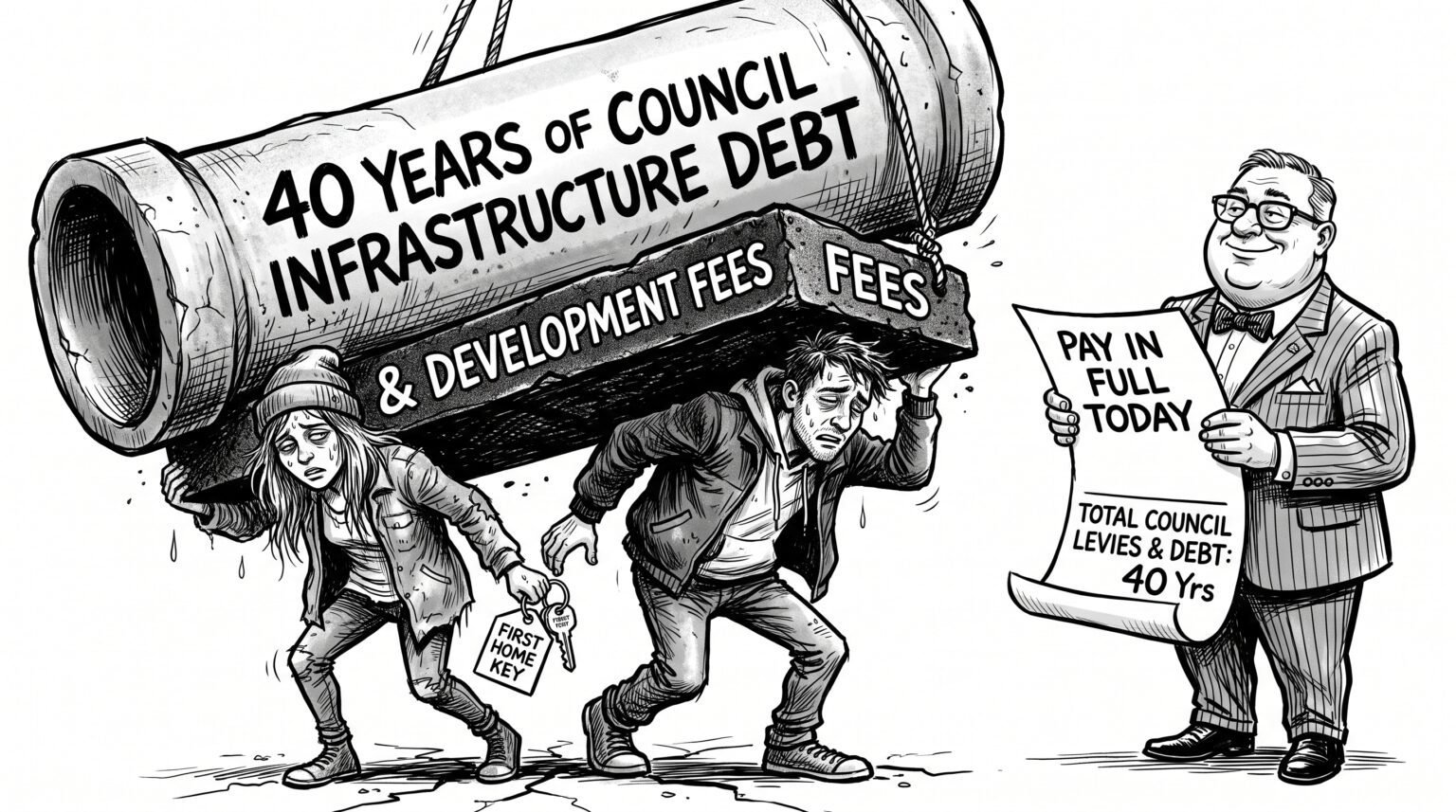
3, The Infrastructure Bill on First Homes
New buyers are paying for more than a home.
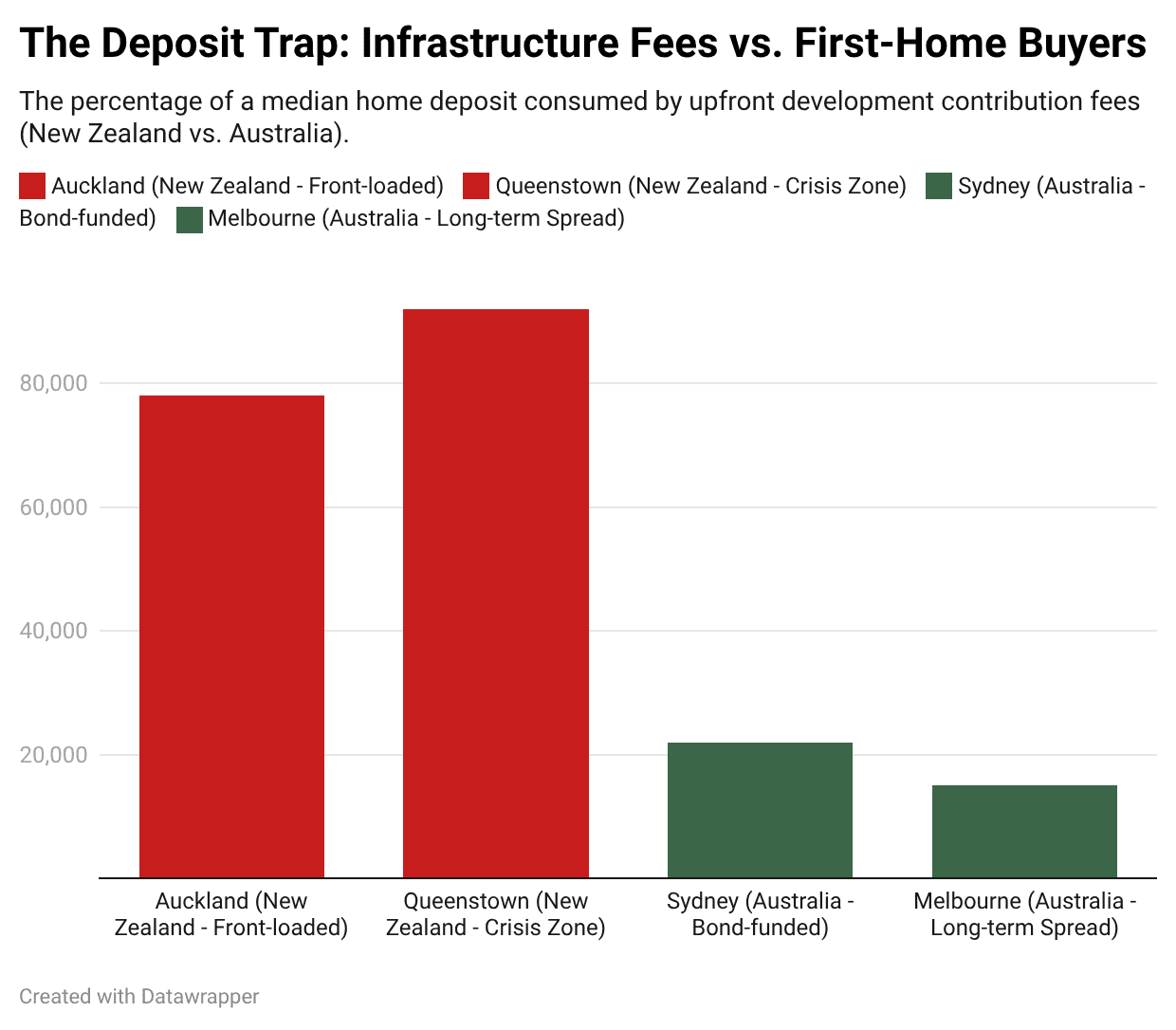
Development contributions and connection costs push roads, water, drainage and local infrastructure into the price of new housing.
Evidence
• Infrastructure costs are added upfront to new homes.
• Long-life public assets are being paid for by the next buyer.
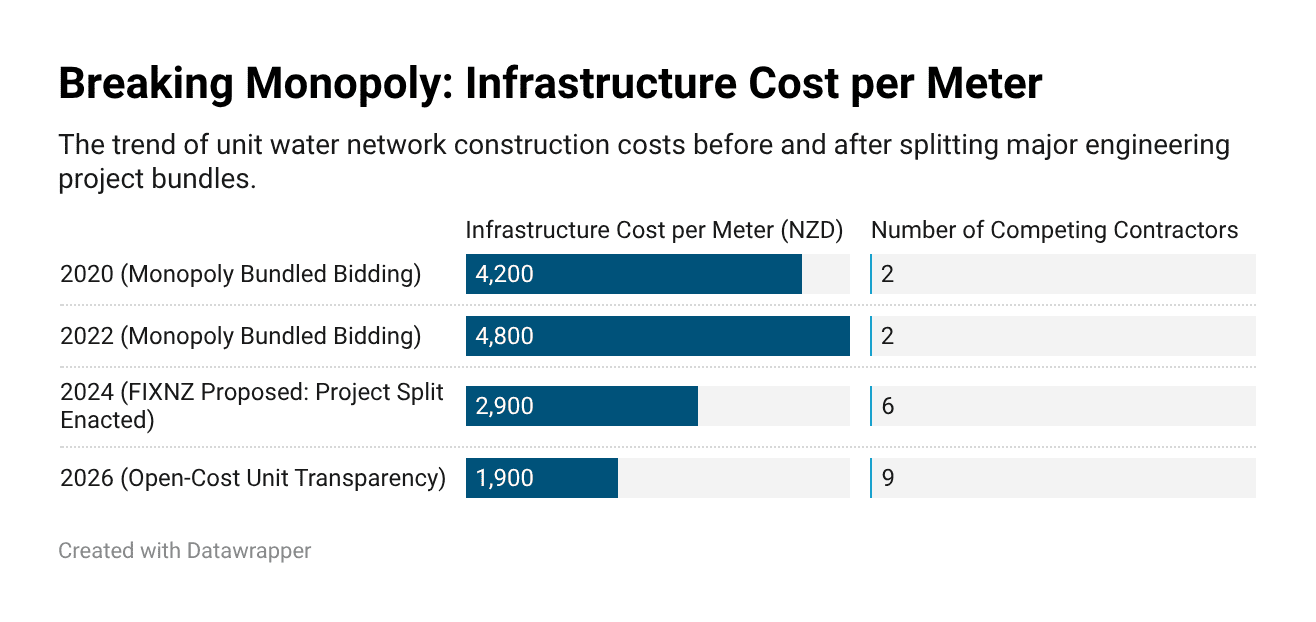
• Opaque large projects can make those costs even higher.
FIXNZ proposes
• Use long-term infrastructure bonds.
• Bring in pension funds and long-term capital.
• Break large contracts into competitive packages.
• Publish unit costs for roads, water and drainage.
• Spread costs across long-term users.
• Reduce or defer charges for first-home buyers.
Core claim
Infrastructure is a long-term public asset.
First-home buyers should not pay the bill upfront.
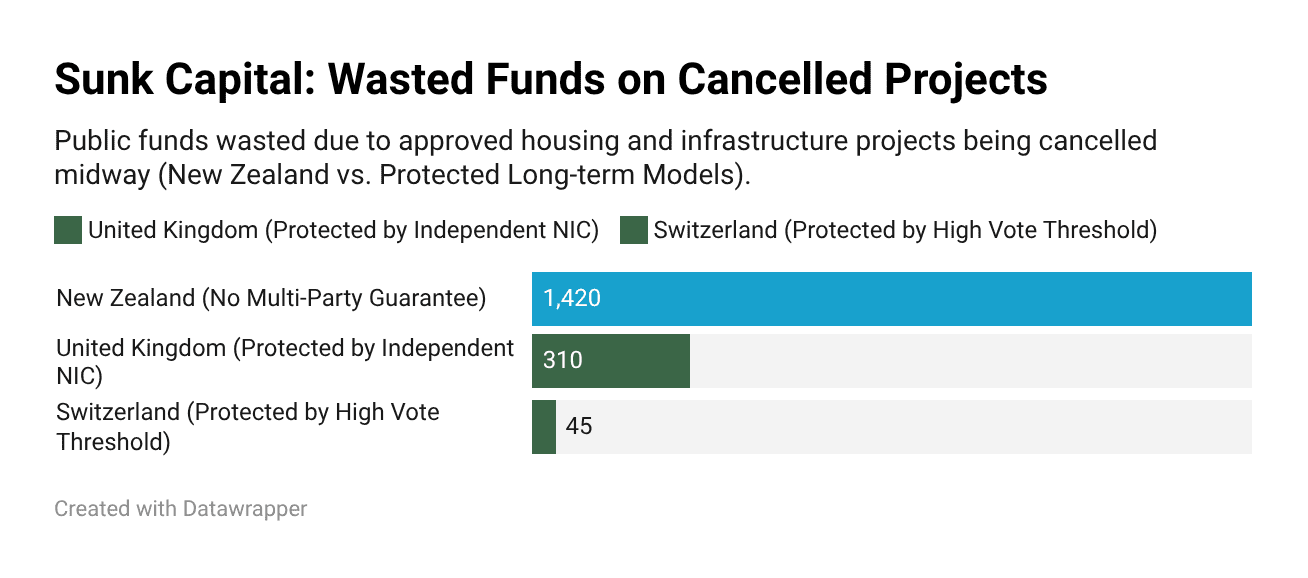
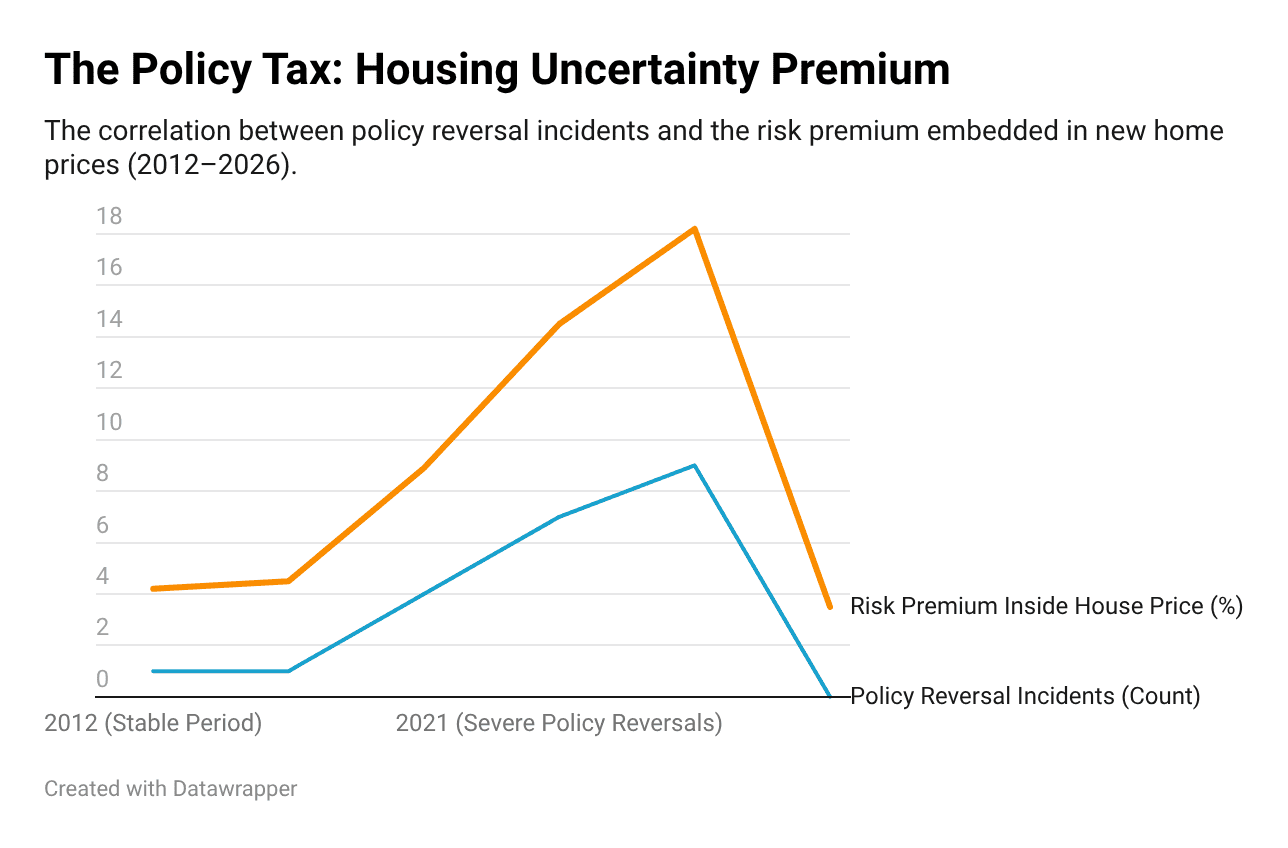
4, Policy Instability Has a Price
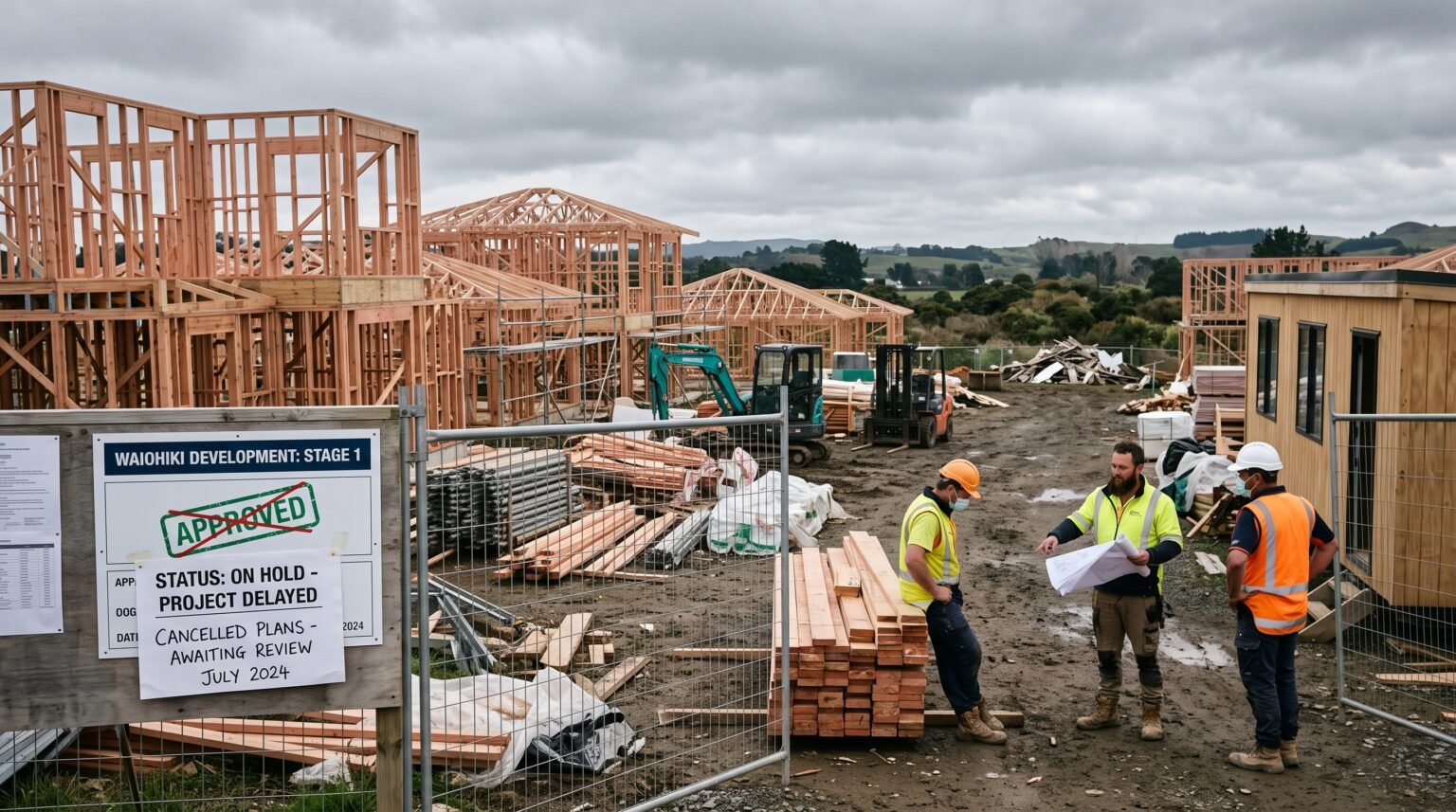
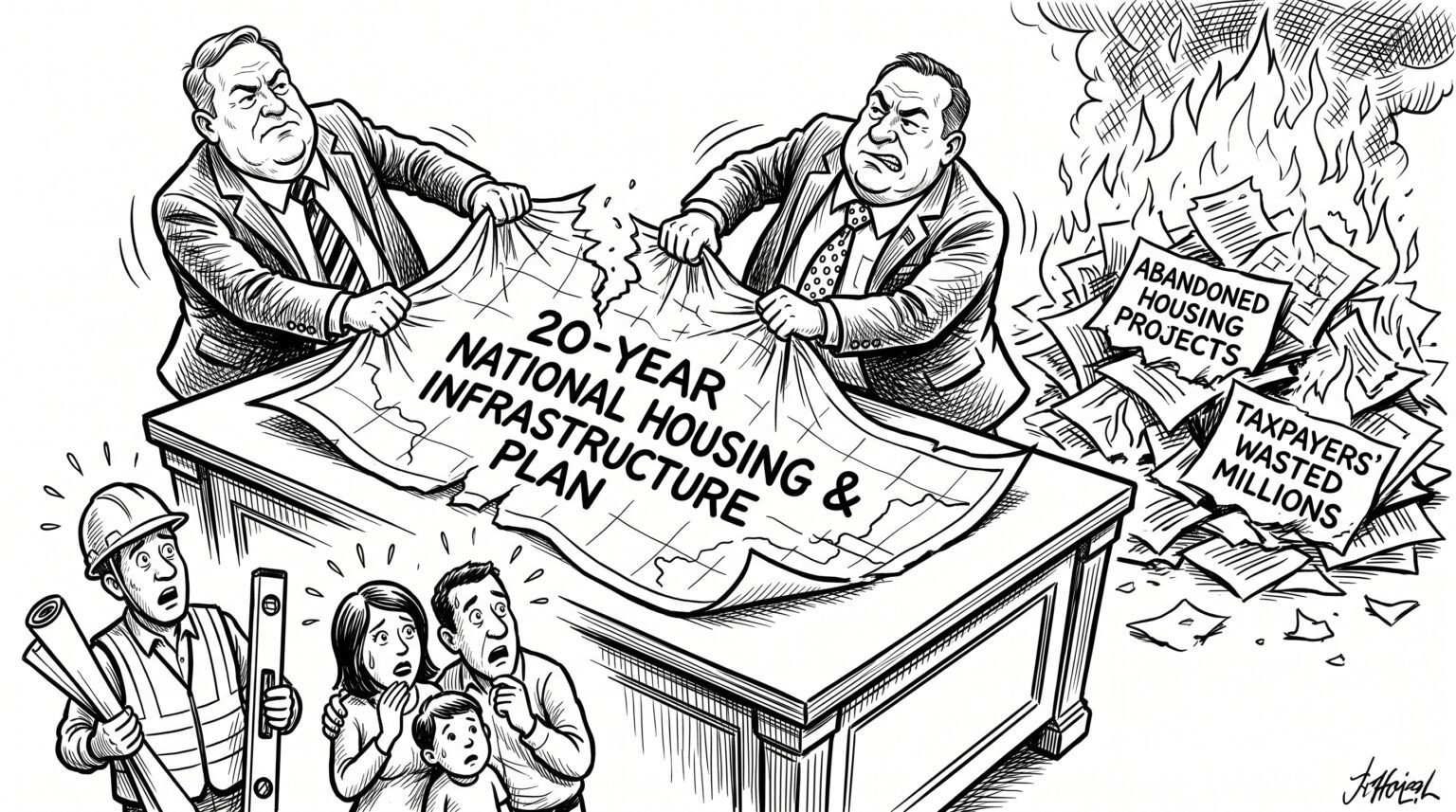
Housing and infrastructure policy changes too often.
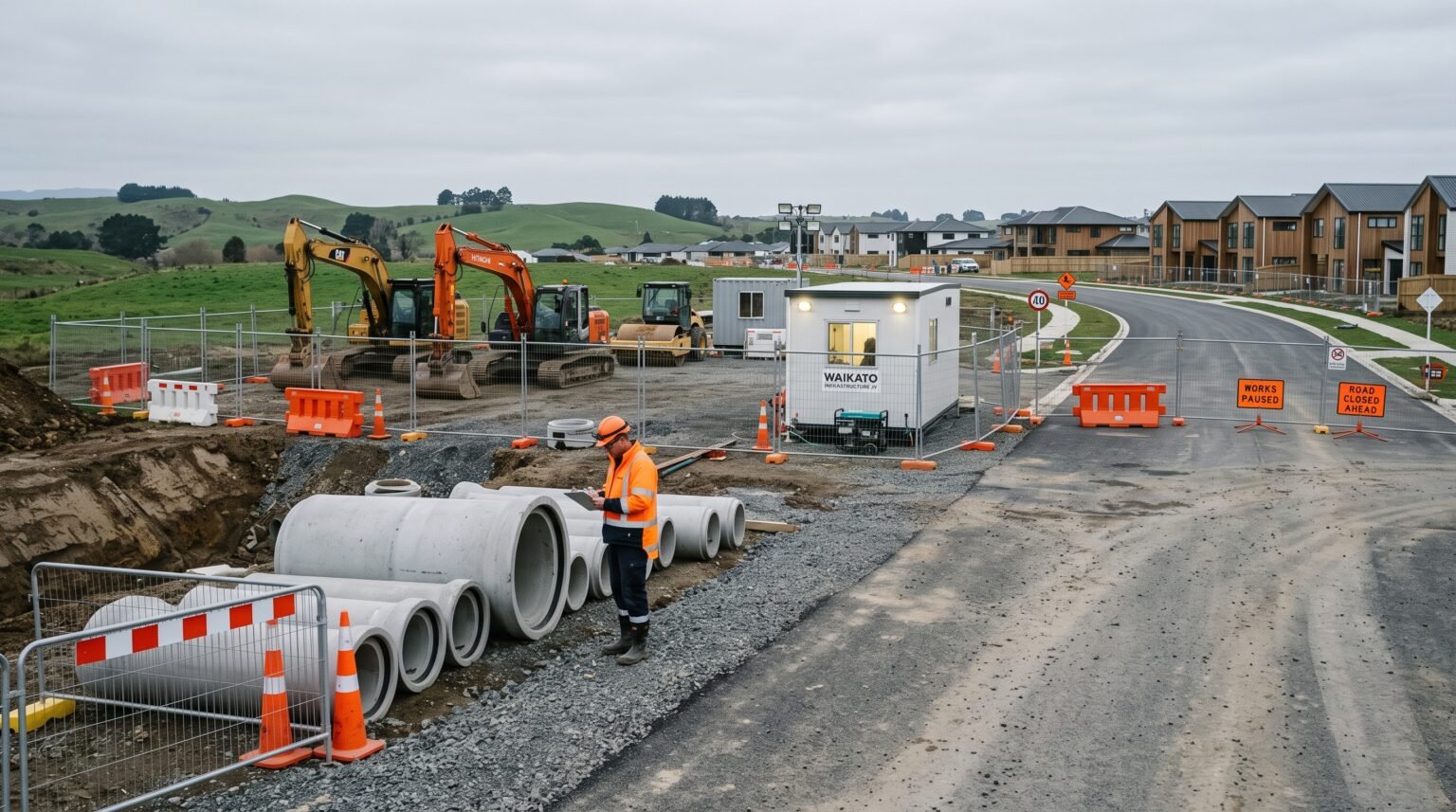
When approved plans are cancelled, reversed or redesigned, the cost does not disappear — it becomes higher risk, delayed supply and more expensive homes.
Evidence
- Frequent policy reversals increase uncertainty for builders, investors and councils.
- Cancelled projects waste planning, design and consultation costs.
- Housing needs long-term infrastructure certainty, not short political cycles.
FIXNZ proposes
- Establish a 20-year housing and infrastructure plan.
- Protect already-approved projects from sudden cancellation.
- Require public cost assessments before major policy reversals.
- Publish the full cost of cancelled projects.
- Require immediate replacement plans before cancellation.
- Raise voting thresholds for major planning reversals.
- Build a cross-party long-term housing framework.
Core claim
Housing policy should be stable across election cycles.



Evidence Cards
United Kingdom — Independent Infrastructure Planning
What they do
The UK created the National Infrastructure Commission to provide long-term infrastructure assessment beyond short-term party politics.
What changed
Major infrastructure needs are reviewed over decades, giving markets, councils and builders clearer long-term signals.
Why it matters for NZ
Housing supply depends on infrastructure certainty. A 20-year plan should not be restarted every election cycle.
Switzerland — Higher Barriers to Major Reversal
What they do
Swiss spatial planning uses stronger institutional and democratic safeguards before major land-use and infrastructure changes.
What changed
Long-term planning is harder to overturn casually, forcing broader agreement before major changes.
Why it matters for NZ
Major housing and infrastructure plans should not be undone by a narrow political swing.
Australia & Canada — Costing Policy Reversals
What they do
Regulatory impact assessment and audit systems can require governments to assess costs before cancelling or reversing major projects.
What changed
Design costs, contract losses, delay costs and public-sector waste become visible to taxpayers.
Why it matters for NZ
If a government cancels an approved housing or infrastructure plan, the public should see the full bill.


Evidence Cards
United Kingdom — Limiting Interest Deductibility
What they did
The UK restricted mortgage interest deductibility for buy-to-let investors, reducing a major tax advantage over ordinary home buyers.
What changed
Highly leveraged property investment became less attractive, especially for investors relying on tax deductions to hold existing homes.
Why it matters for NZ
Tax rules should not make it easier to buy existing homes for investment than to buy a first home to live in.
Victoria, Australia — Taxing Vacant Residential Land
What they do
Victoria applies a Vacant Residential Land Tax to homes or residential land left unused for long periods.
What changed
Holding empty or under-used property becomes more expensive, creating pressure to rent, develop or release land back to the market.
Why it matters for NZ
Land with housing potential should not be cheap to hold idle while families face high rents and high prices.
Germany & US — Recovering Publicly Created Land Value
What they do
Germany and parts of the United States use value-capture tools to recover some land-value gains created by public infrastructure, zoning change or urban renewal.
What changed
When public investment raises private land values, part of that uplift can return to the community instead of becoming a private windfall.
Why it matters for NZ
Public roads, pipes, rail and zoning decisions should not become free capital gains for passive landholders.
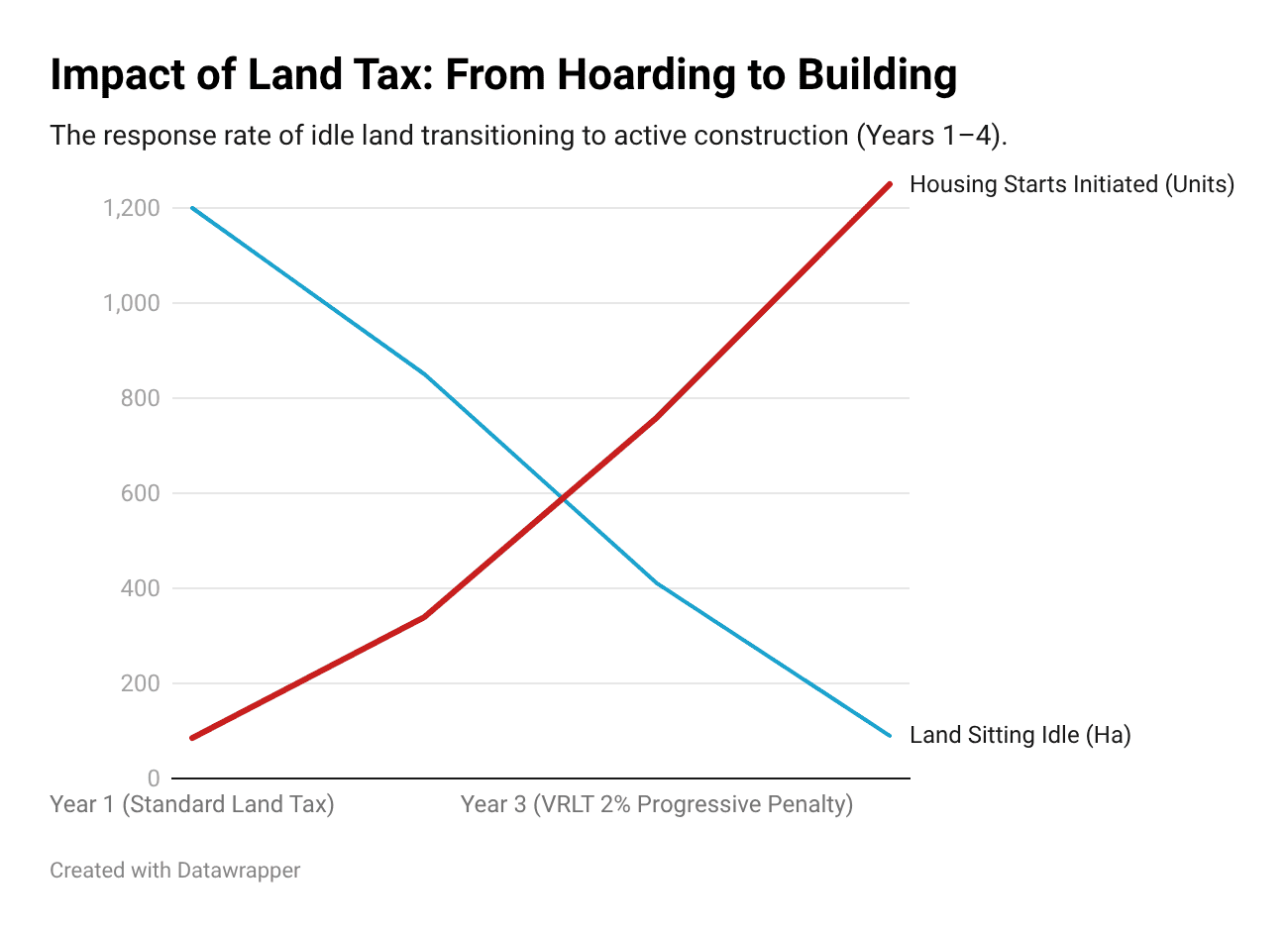
5, Reward Building, Not Hoarding
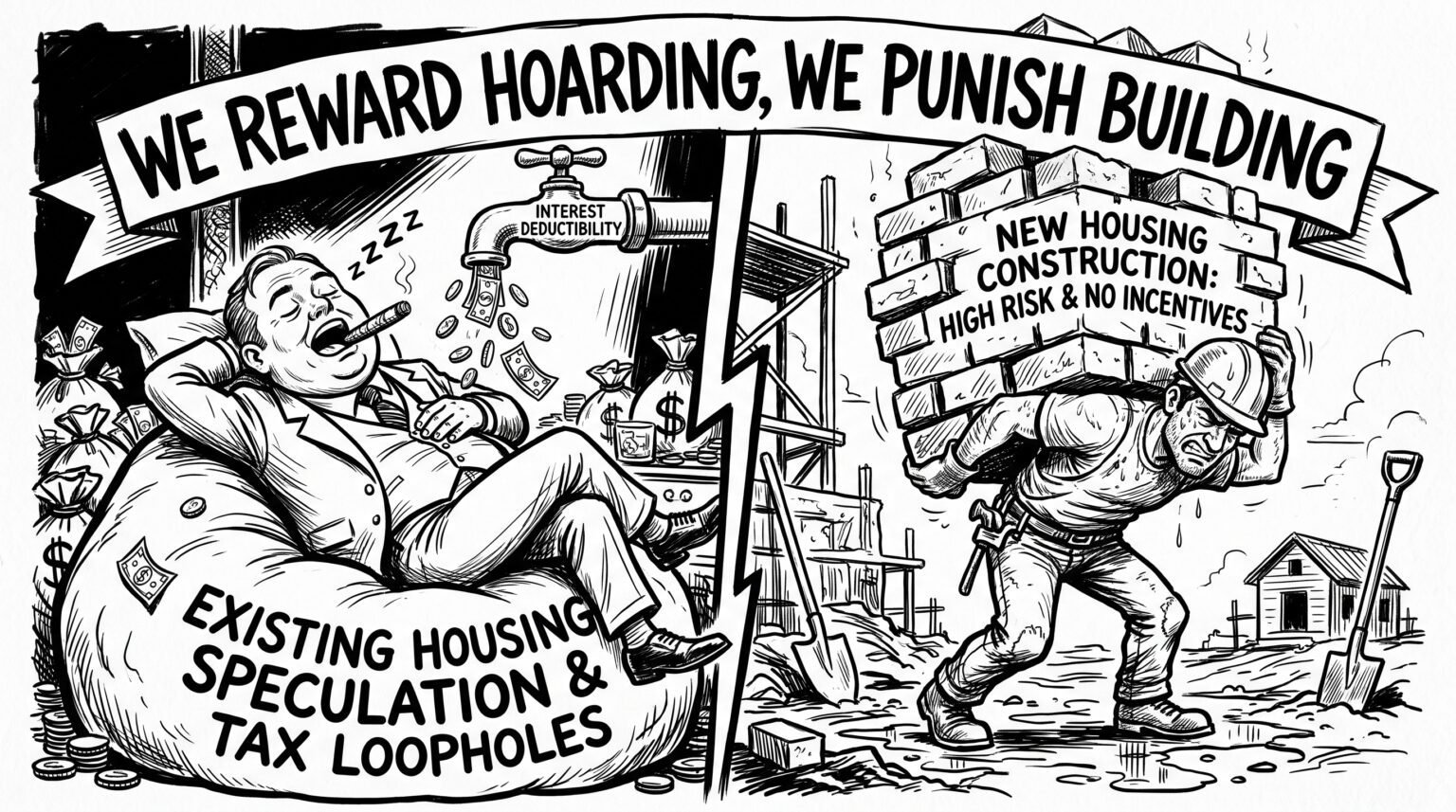
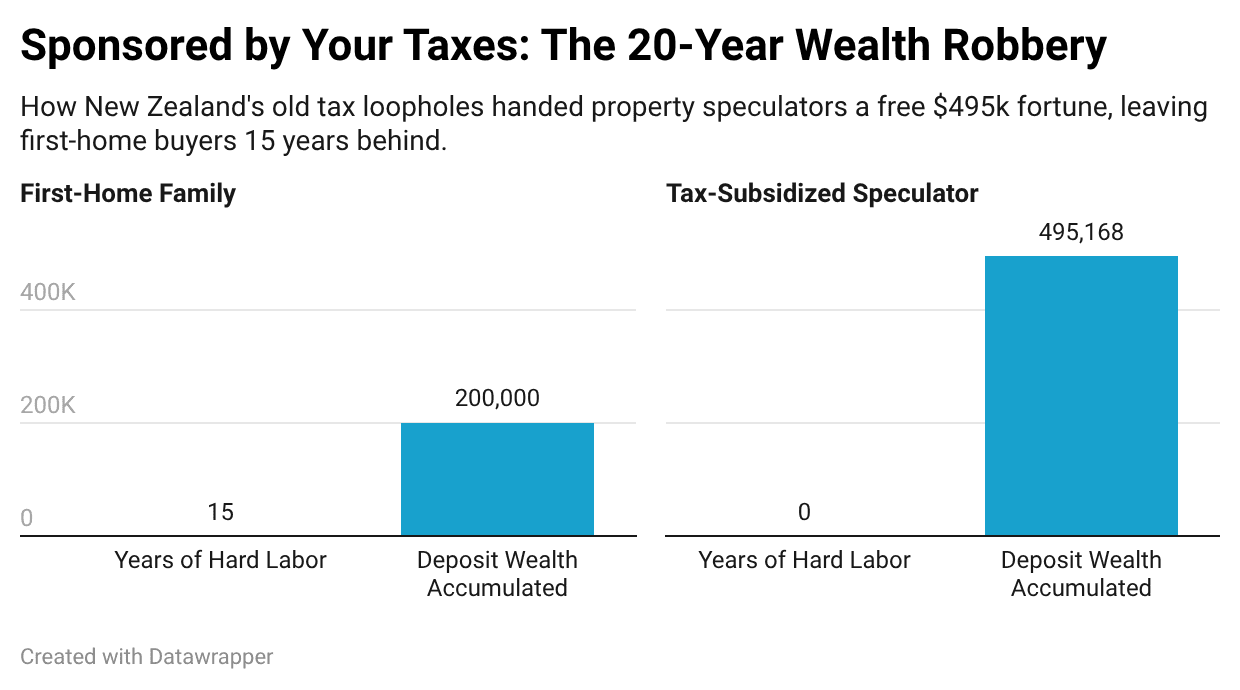
Investment property has often enjoyed tax and financing advantages that first-home buyers do not have.
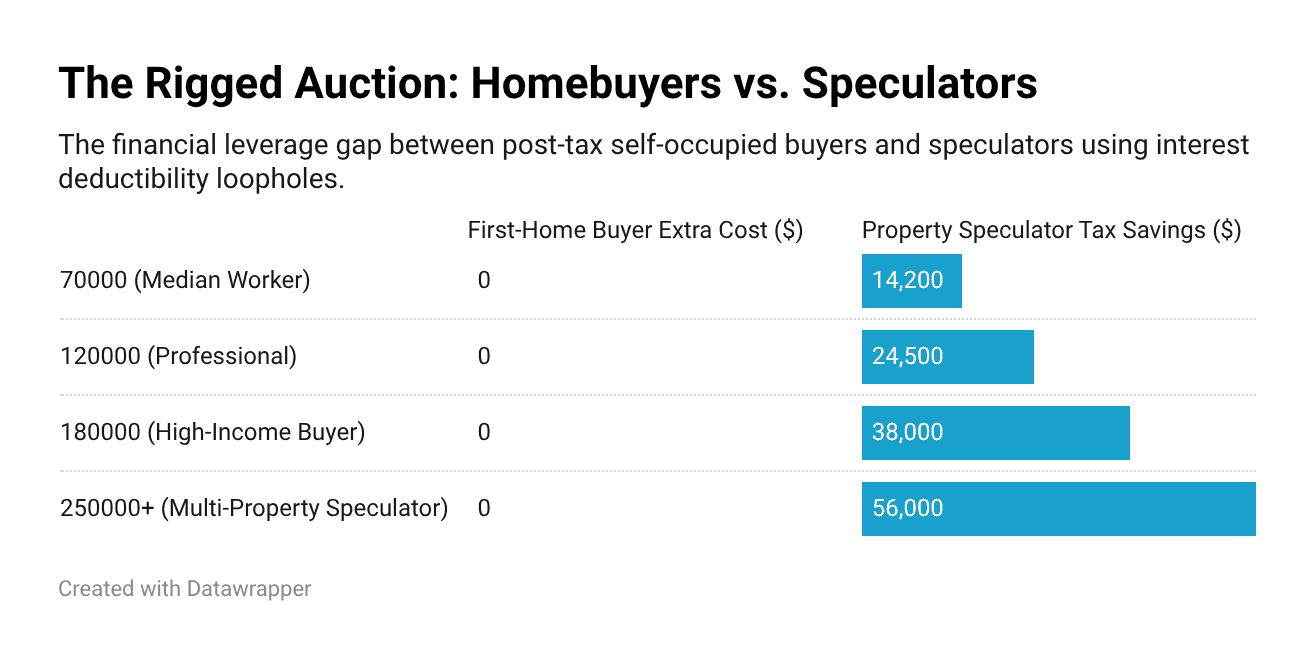
When existing homes become a tax-favoured investment asset, buyers with wages are forced to compete against leveraged investors. The result is higher prices, more speculation and less productive capital.
Evidence
- Interest deductibility can give investors an advantage over owner-occupiers.
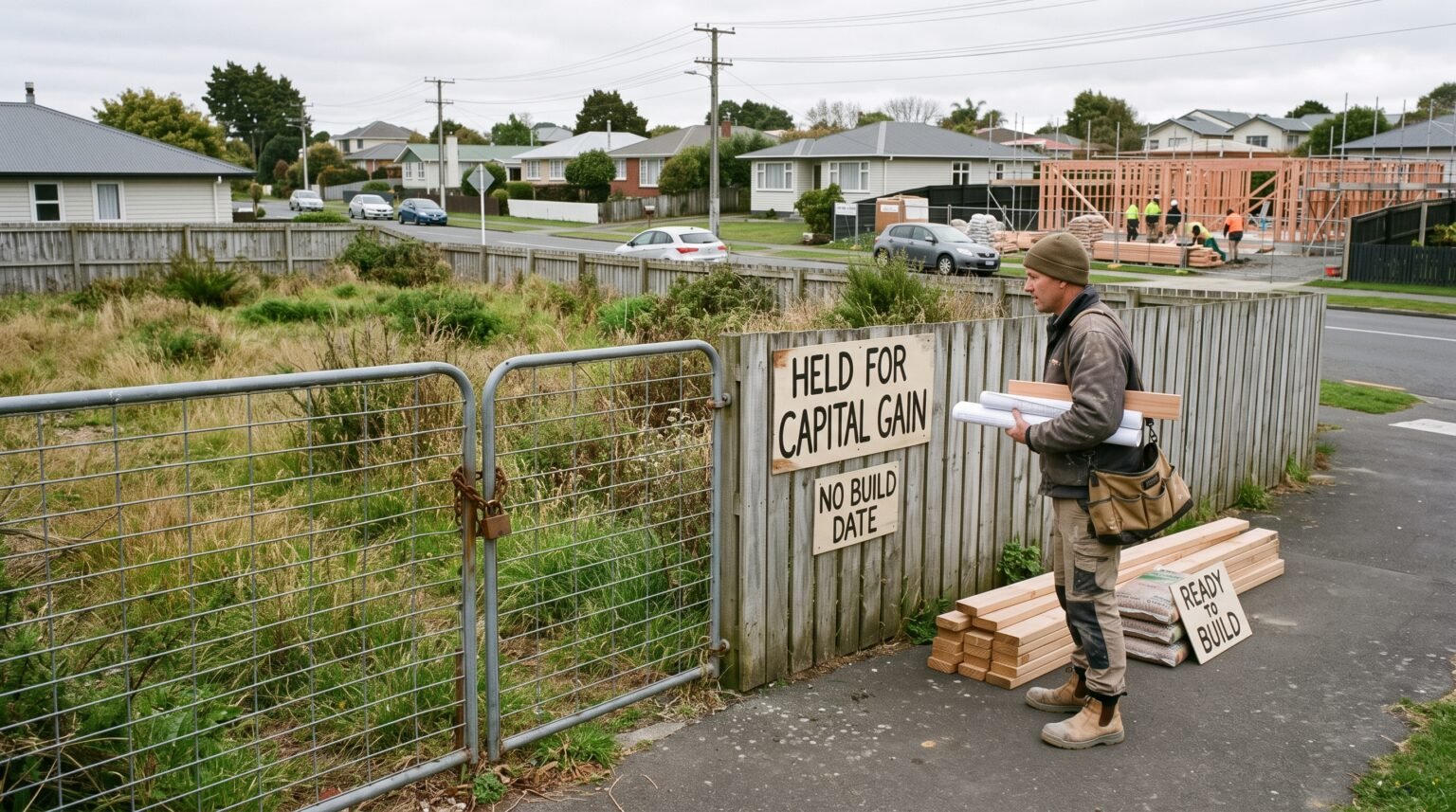
- Low holding costs encourage vacant land and under-used property to be held for capital gain.
- Public infrastructure can create private windfall gains if value uplift is not recovered.
FIXNZ proposes
- Remove interest deductibility for existing investment housing.
- Keep tax support only for genuine new housing supply.
- Register properties as owner-occupied or investment-owned.
- Apply rising holding costs to vacant or under-used land.
- Tax land based on its planned development capacity.
- Recover abnormal land-value gains created by public investment.
- Require long-idle land to be developed, sold or acquired.
- Apply progressive tax to large multi-property portfolios and major inherited property wealth.
Core claim
Reward building, not hoarding.
6, Public Power, Private Property
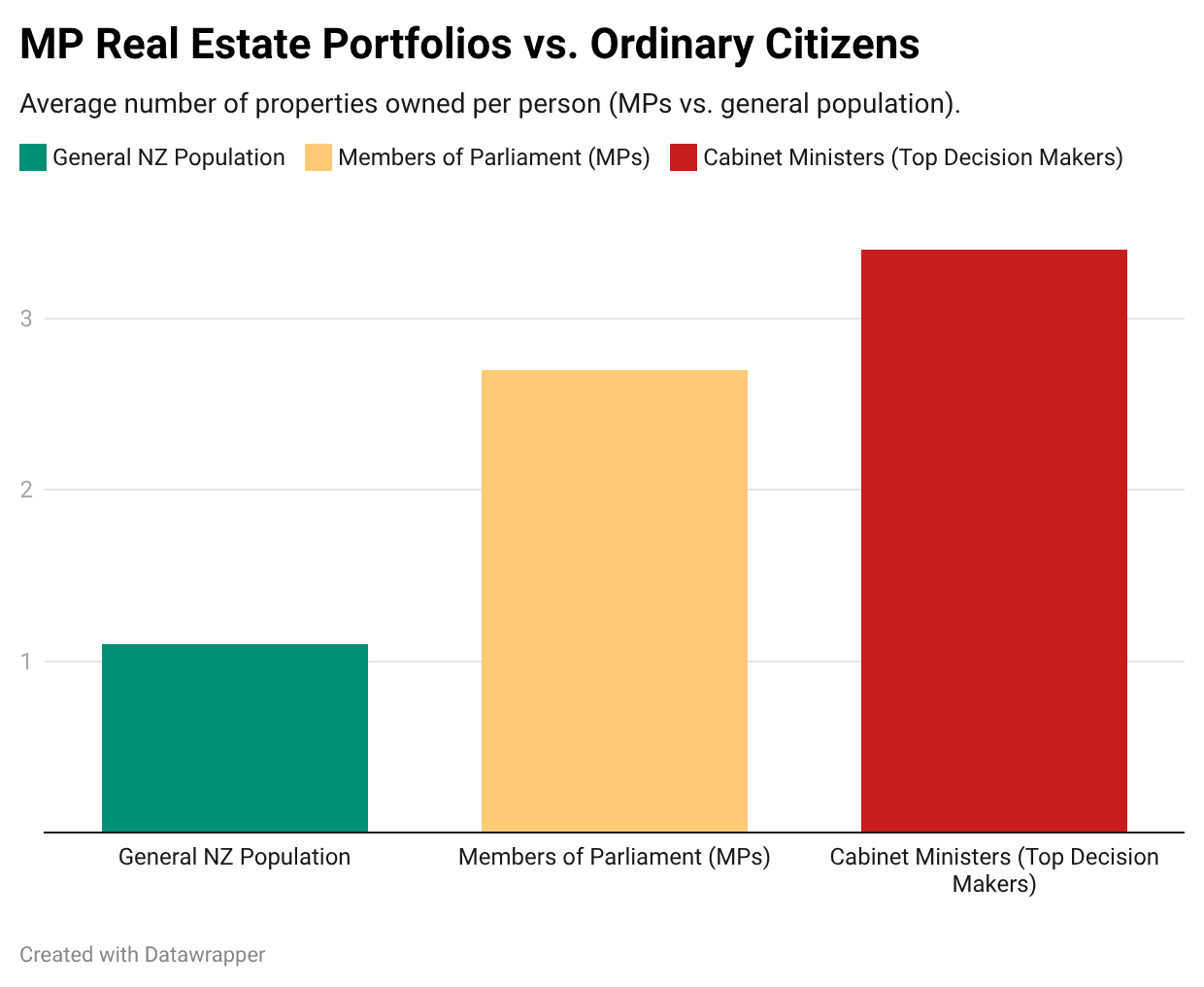
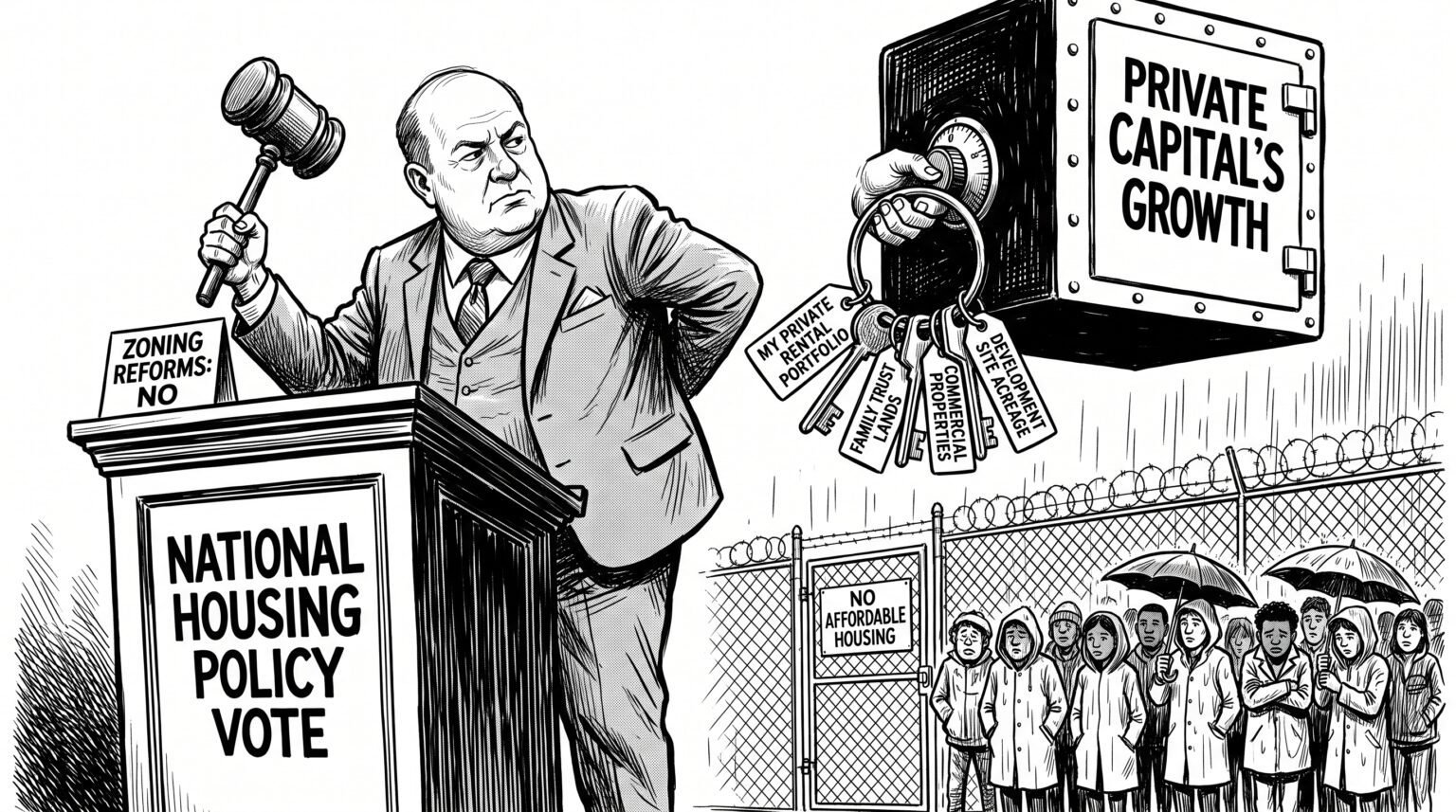
Housing policy can be distorted when decision-makers also hold significant property interests.
The issue is not whether public officials are allowed to own homes.
The issue is whether hidden or direct property interests can influence planning, zoning, tax and infrastructure decisions.
Evidence
- Housing policy can directly affect private property values.
- Property interests held through spouses, companies or trusts may be hard to see.
- Weak disclosure and weak recusal rules reduce public trust.
FIXNZ proposes
- Declare property interests held by officials, spouses, companies and trusts.
- Require recusal where there is a major direct interest.
- Create independent verification of interest declarations.
- Investigate insider trading and abuse of public office.
- Make decisions voidable when material interests are hidden.
- Apply criminal and asset penalties for fraud or benefit transfer.
Core claim
Public power must not become a tool for private property gain.





Evidence Cards
US — Disclosure and Recusal Rules
What they do
The United States requires federal officials and lawmakers to disclose financial interests, including certain transactions and assets, under ethics and transparency rules.
What changed
Disclosure systems make it harder for public officials to quietly benefit from policy decisions that affect their own financial position.
Why it matters for NZ
Housing, zoning and infrastructure decisions can move land values. Direct interests should be declared, checked and managed before decisions are made.
Canada — Conflict of Interest Enforcement
What they do
Canada uses conflict-of-interest rules and an independent ethics commissioner system to regulate public officials with private financial interests.
What changed
Officials can face investigation, sanctions and public findings when private interests are not properly disclosed or managed.
Why it matters for NZ
Hidden property interests should not be treated as a paperwork mistake when they affect housing, land or infrastructure decisions.
United Kingdom — Registering Financial Interests
What they do
The UK maintains public registers requiring MPs to disclose relevant financial interests, including property-related income above reporting thresholds.
What changed
Public registers allow voters, journalists and watchdogs to see where private interests may overlap with public decision-making.
Why it matters for NZ
Transparency is the first defence. Trust improves when property interests are visible, independently checked and linked to clear recusal rules.
This analysis draws on public evidence from Stats NZ, the Ministry of Housing and Urban Development, MBIE, the Reserve Bank of New Zealand and the New Zealand Infrastructure Commission.